



16 Nov Botswana’s Green Season: Why January to March Deserves a Place on Your Safari Calendar
Botswana’s safari reputation is built largely around the dry months: elephants gathering beside the Chobe River, wildlife concentrating around permanent water and the Okavango Delta’s annual flood. Those are excellent reasons to travel between June and October. But they tell only half the story. From roughly November to March, summer rain changes the country’s wildlife geography. The northern bush thickens, the Kalahari becomes productive grassland, migratory birds arrive and zebra move towards seasonal grazing on the pans.
For the right traveller, this can be a particularly rewarding time to visit. The important qualification is the right traveller. A green-season safari should not simply copy a dry-season itinerary at a lower price. The choice of region, camp and activities matters even more when rainfall and water levels are changing.
What is Botswana’s green season?
Botswana’s summer rains usually begin around November and continue into March or April, although their onset, intensity and distribution vary considerably. January and February are generally among the wettest months. Storms can produce dramatic light and fresh vegetation, but also muddy tracks, hot afternoons and delays to road transfers. Some seasonal camps close, and certain activities are restricted.
The term “green season” can be misleading if it suggests rain throughout every day. There are often sunny periods between showers. Equally, it would be unwise to promise consistently clear mornings or accessible tracks. A good itinerary allows flexibility rather than trying to squeeze in every possible activity.
The key distinction: the Kalahari improves while northern game becomes less concentrated
Central Kalahari Game Reserve: a summer wildlife destination
The Central Kalahari Game Reserve is one of the strongest arguments for travelling in the rains. Seasonal grass in its fossil river valleys, including Deception Valley, draws springbok, gemsbok, wildebeest and other grazers. Lions, cheetahs and jackals use the same open country. Young antelope and changing predator activity can make January to March especially interesting, though individual sightings remain unpredictable.
It is a very different safari from the Okavango. The landscapes are expansive, sightings may involve long intervals between animals and the appeal lies partly in the sense of space. Travellers who want constant close encounters with elephants, buffalo and hippos may be happier in northern Botswana. Those who enjoy tracking, open plains, raptors and the possibility of cheetah in a less conventional setting should give the Kalahari serious consideration.

Nxai Pan and Makgadikgadi: follow the grazing, not a fixed date
Seasonal rain also draws zebra towards the grasslands of Nxai Pan and the wider Makgadikgadi ecosystem. There are distinct migratory movements within this landscape, so the often-used phrase “the Botswana zebra migration” is an oversimplification. Herd locations change as rain produces new grazing, and they do not arrive or depart on an exact calendar date.
December to March is a useful planning window, with January and February often productive for animals on the green plains. But this is not a guaranteed spectacle outside a particular lodge. If seeing large zebra herds is the main objective, build the itinerary around current conditions and local reports, allow several nights and understand that animals can spread over a considerable area.
The salt pans themselves also behave differently by season. Activities that rely on firm, dry salt crust — including some quad-bike excursions and pan sleep-outs — may not operate when surfaces are wet. A safari focused on the migration is therefore not necessarily the right trip for somebody whose priority is crossing an immense white pan.
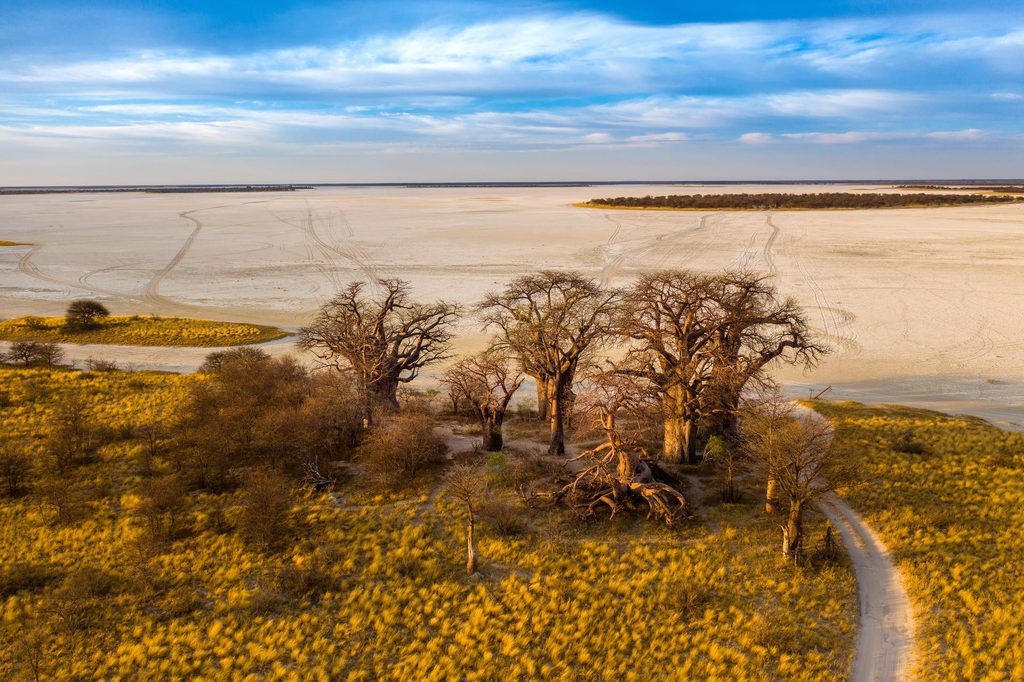
Nxai Pan
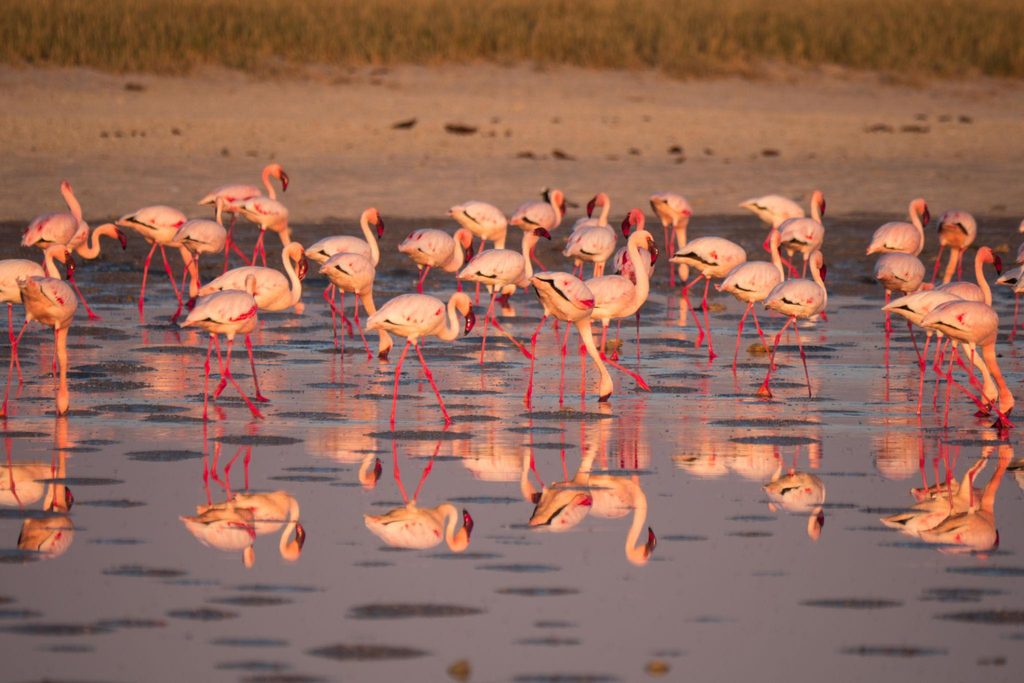
Makgadikgadi
What about the Okavango Delta, Moremi and Chobe?
In the north, rain fills temporary pools and provides fresh grazing away from the permanent channels. Large mammals can disperse, while thicker vegetation makes them harder to locate. This does not mean that the Okavango Delta, Moremi or Chobe become poor destinations. Resident predators remain, birding can be excellent and landscapes are often strikingly green. It does mean that the reliable concentrations of game associated with the late dry season should not be assumed.
One of Botswana’s most easily misunderstood seasonal features is the Okavango flood. The Delta’s annual flood originates in rainfall far upstream in Angola and generally reaches much of the Delta during Botswana’s dry months, rather than coinciding with local summer rain. Consequently, a camp advertising mokoro excursions or boating in August may have very different water access in February. Some concessions retain permanent channels; others depend on seasonal water. Check the actual camp and intended travel month, not simply the fact that it sits “in the Delta”.
Chobe’s riverfront is another example. The immense dry-season elephant concentrations are not a sensible promise for February, when animals have access to water elsewhere. Chobe can still offer rewarding wildlife and birding, but expectations should be set accordingly.
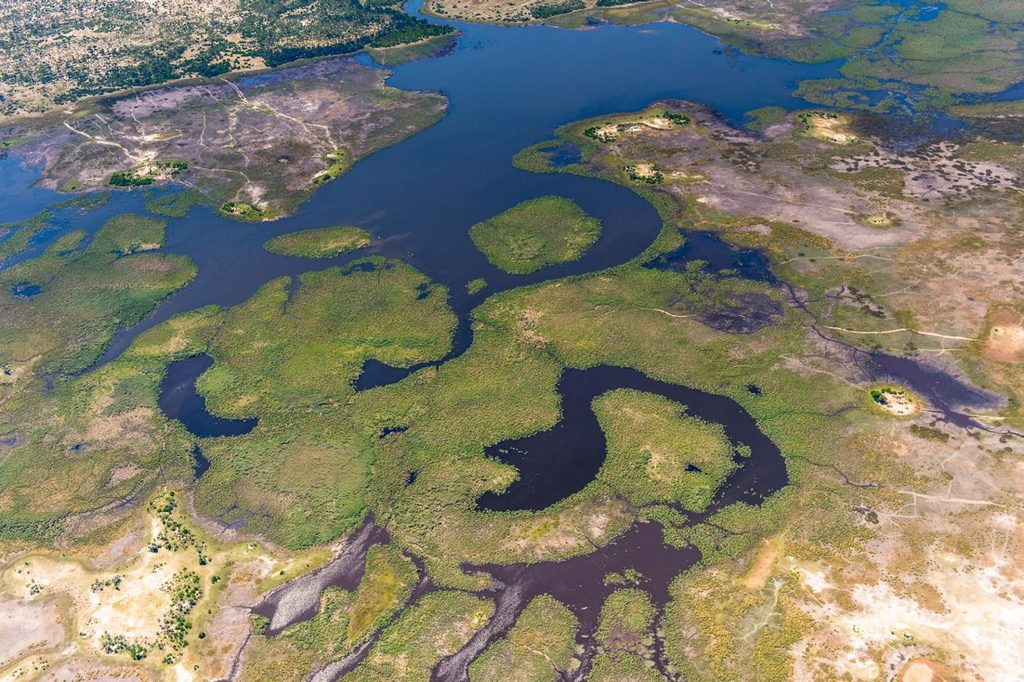
Okavango Delta
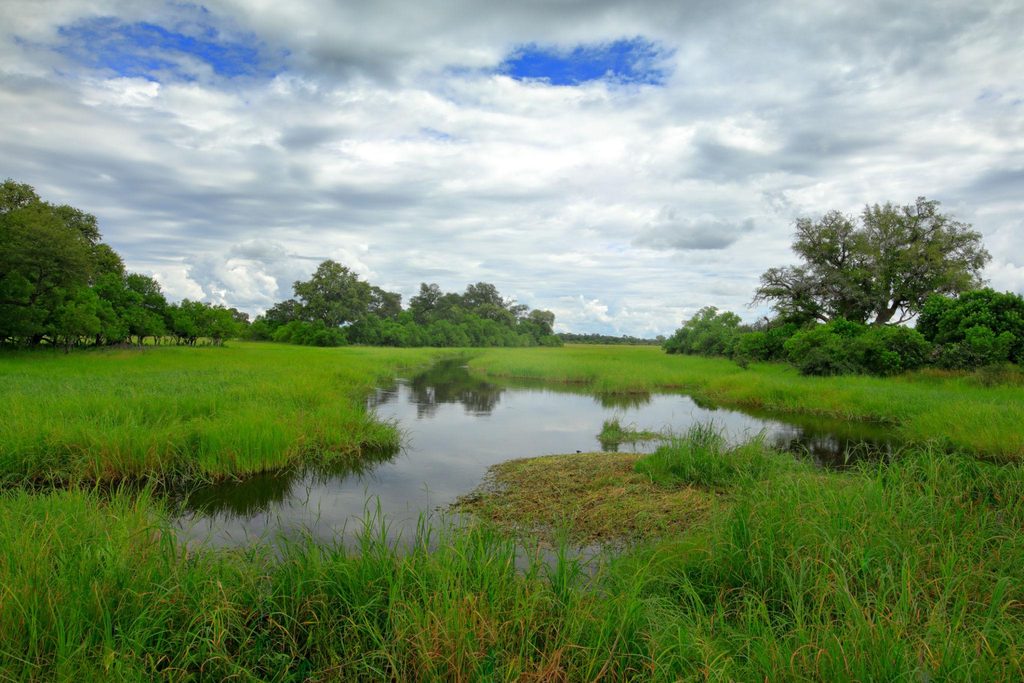
Moremi Game Reserve
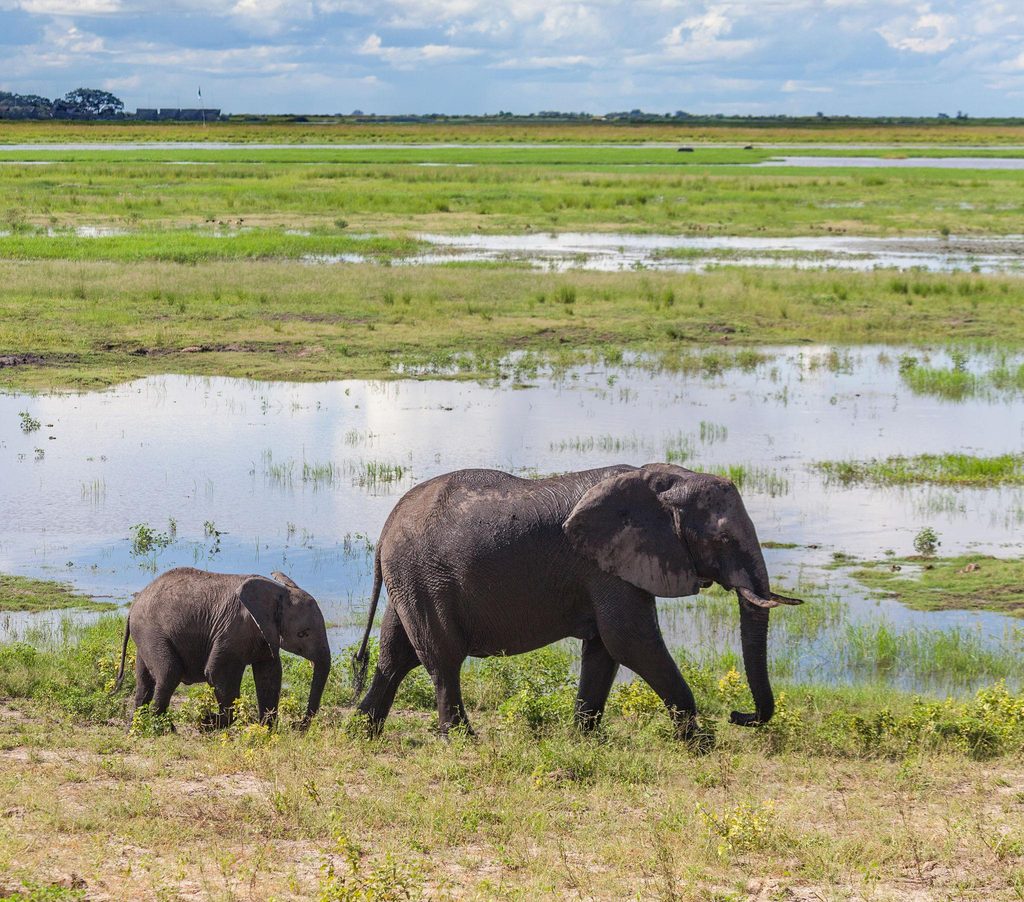
Chobe National Park
Why birders should pay attention to November–March
For dedicated birders, the wet season has a particularly strong case. Palearctic migrants and intra-African migrants add to Botswana’s resident species, while many birds become more vocal or conspicuous during breeding activity. Cuckoos, bee-eaters, rollers and migrant raptors can all enrich a trip. The exact mix varies by habitat and timing.
In the Kalahari and around Nxai Pan, look for open-country specialists such as Kori Bustard, Northern Black Korhaan, Secretarybird, Pale Chanting Goshawk and Double-banded Courser. A productive day may involve watching larks and raptors as much as large mammals. The Okavango and its fringes add wetland and woodland species, including Slaty Egret, Wattled Crane, African Jacana, African Pygmy Goose and Coppery-tailed Coucal, depending on the habitat visited.
Seasonal water on the Makgadikgadi pans can attract flamingos and other waterbirds, but their presence and numbers depend on flooding and food conditions. It would be misleading to guarantee a flamingo spectacle on a particular departure. Birders targeting one or two scarce species should plan time in the right microhabitats with a specialist guide, rather than rely on a general game-drive itinerary.
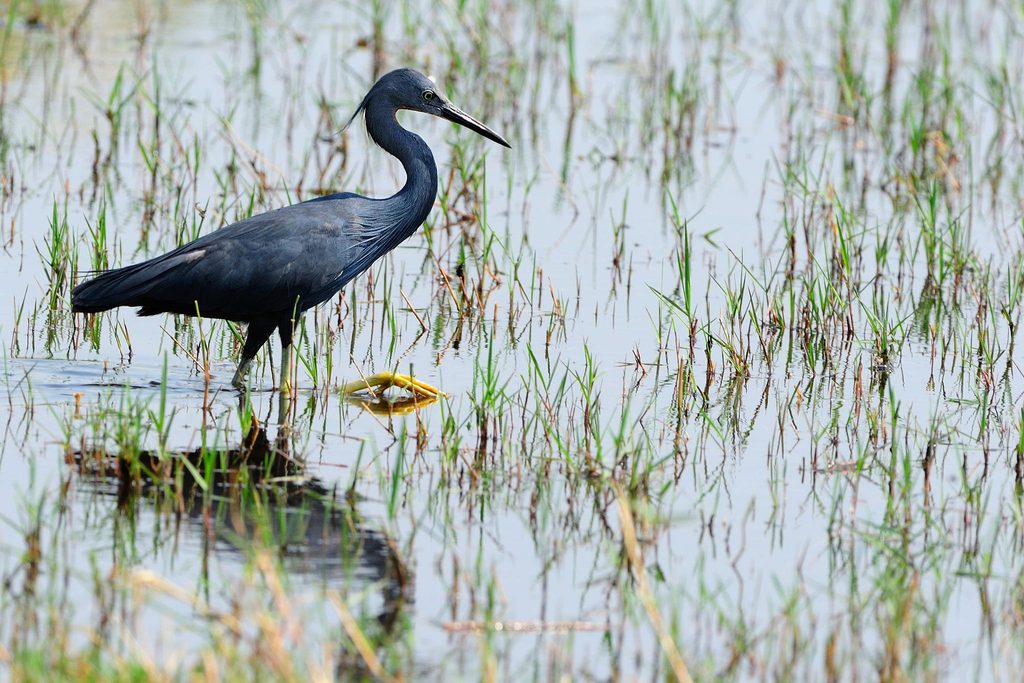
Slaty Egret – Okavango Delta
Does the green season offer better value?
Often, yes — but “cheaper” should not be the starting point. Some camps offer lower seasonal rates, and there may be fewer vehicles at sightings. However, the saving depends on which camps are open, aircraft transfers, the length of stay and any special offers available for the actual dates. A lower nightly lodge rate can be offset by an expensive flight connection or an itinerary that spends too much time moving between regions.
In practical terms, we would rather recommend three nights in a well-positioned Kalahari camp than two rushed nights there followed by a long transfer simply to add another name to the itinerary. For photographers, the extra time also helps when weather interrupts a drive or animals move between patches of grazing.
Luxury or mid-range: what should you prioritise?
Botswana has outstanding high-end camps, but the most expensive property is not automatically the best choice for a green-season trip. We look first at location, guiding, seasonal access and the activities genuinely available. A comfortable camp near productive grassland can be more suitable than a luxurious Delta camp whose signature water activity is unavailable during the planned stay.
At the luxury end, consider established safari operators with camps in the Kalahari or the Makgadikgadi region, but verify current operating dates, transfer arrangements and inclusions directly before quoting. For more moderate budgets, carefully chosen mobile or simpler permanent accommodation may offer excellent guiding and time in the field. In remote parts of the Kalahari, however, logistics and comfort can vary substantially; this is not an area where we would recommend selecting accommodation on price alone.
How we would design a green-season Botswana safari
For a traveller interested in mammals, birds and photography, a sensible 10–12-night framework might combine three nights in Nxai Pan or the Makgadikgadi region, three nights in the Central Kalahari and four or five nights in a suitable northern Botswana concession. The precise order should follow flight connections, camp operations and the season’s conditions. This is a planning framework, not a claim that every transfer is direct or available daily.
Alternatively, travellers whose priority is big cats and antelope in open country might spend longer in the Kalahari and leave the Delta for a separate dry-season journey. Families or first-time safari visitors who value predictable activities and high concentrations of large mammals may be better advised to travel in the dry season instead. Good safari planning sometimes means recommending a different month.
Five questions worth asking before booking
- What wildlife matters most? Zebra migration, cheetah and breeding birds suggest a different route from elephants and boat-based game viewing.
- Is the camp open on the exact dates? Seasonal closures and activities vary by property.
- Will water activities actually operate? Delta water levels are highly localised and cannot be inferred from the season alone.
- How will you travel between areas? Wet tracks and remote distances may make light-aircraft transfers preferable, subject to availability and baggage limits.
- Can the itinerary absorb weather delays? Fewer, longer stays usually make more sense than an ambitious circuit.
So, is Botswana worth visiting in the green season?
Absolutely, provided the itinerary is designed for what the season does well. For Kalahari landscapes, zebra movements, breeding activity, migratory birds and dramatic photography, January to March can be a compelling choice. For dependable high concentrations of elephants beside the Chobe River or water-based exploration of the Okavango, the dry season is often the better fit.
At Wild Birding, we design private Botswana safaris around the wildlife you most want to see, your preferred accommodation and a realistic pace. Whether you are considering a green-season Kalahari journey or a classic Delta safari, tell us what you have in mind and we will help work out the right areas and dates.
No Comments