



19 Nov Beyond the Beach: Arabuko-Sokoke Forest, Mida Creek and Kenya’s Wild Coast
It is easy to think of Kenya’s coast as somewhere to relax after a safari: warm water, white-sand beaches and a few days without an early start. Yet around Watamu and Malindi, a short journey inland brings you to one of East Africa’s most important remaining coastal forests. Add the tidal flats of Mida Creek and the Sabaki River estuary, and a beach stay becomes a surprisingly varied wildlife holiday.
This is a particularly good combination for couples or families with different interests. One person might want to spend several mornings looking for rare forest birds, while another would prefer snorkelling, a quiet beach or a visit to a historic Swahili settlement. With the right base and sensible timings, neither needs to compromise.
Arabuko-Sokoke: a forest unlike the safari landscapes
Arabuko-Sokoke Forest Reserve covers approximately 420 square kilometres near Watamu and Malindi. The Kenya Forest Service describes it as East Africa’s largest and most intact coastal forest. It is an important refuge for wildlife associated with the increasingly fragmented forests of the East African coast.
What makes the forest especially interesting is that it is not one uniform habitat. Different soils support different communities of trees and wildlife. A birding route that concentrates entirely on the forest close to the entrance may miss species associated with quite different woodland further inside.
Three habitats worth understanding
Mixed forest has a relatively dense canopy and understorey. It is an important habitat for skulking forest birds, including East Coast Akalat, and for the rare Golden-rumped Sengi, also known as the Golden-rumped Elephant-shrew.
Brachystegia woodland is more open, with taller trees and a lighter understorey in places. This is useful habitat for coastal specialities such as Amani Sunbird and Sokoke Pipit. It is also a pleasant contrast to the denser forest, particularly when searching carefully along tracks and clearings.
Cynometra forest and thicket can be dense and difficult to see into. It is strongly associated with the Sokoke Scops Owl, one of the forest’s most sought-after birds. A specialist local guide makes a considerable difference when looking for this small, well-camouflaged owl.
These habitat differences are why we would rather arrange two properly planned forest sessions than rush through several areas in a single morning.
Which birds make Arabuko-Sokoke special?
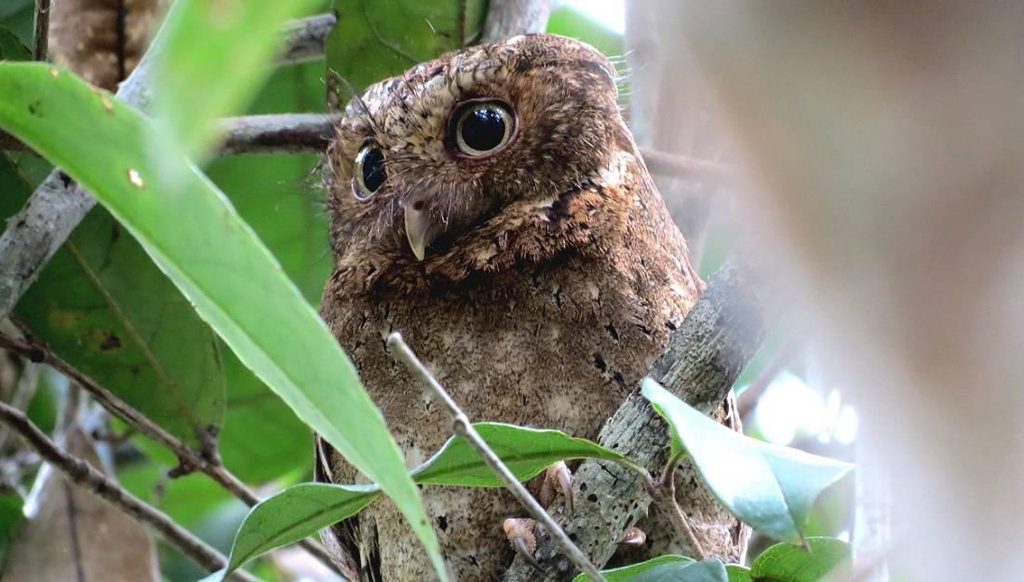
Arabuko-Sokoke is best known among birdwatchers for its restricted-range and threatened species. Several are difficult to see, and the most important distinction is between a species being present and a sighting being likely on a particular visit.
Sokoke Scops Owl
The tiny Sokoke Scops Owl is closely associated with coastal forest in Kenya and north-eastern Tanzania. Its cryptic plumage makes it extremely difficult to locate without local knowledge. A responsible search should avoid excessive disturbance of a roosting bird; a photograph is never worth repeatedly flushing an owl.
East Coast Akalat and Sokoke Pipit
East Coast Akalat is a secretive bird of the forest floor and lower vegetation. Patience, quiet walking and familiarity with calls are usually more useful than covering large distances.
Sokoke Pipit is another speciality, often sought in suitable woodland and forest-floor habitat. Both birds reward a guide who understands the precise habitat rather than simply following the busiest tourist trail.
Amani Sunbird and Clarke’s Weaver
Amani Sunbird is associated with the coastal forest region and can be a key target in suitable woodland. Clarke’s Weaver is an even more specialised Kenyan bird, known from Arabuko-Sokoke and the Dakatcha Woodland to the north. It should not be presented as an easy or guaranteed forest sighting; breeding ecology, movements and current local information matter.
Other notable species in the wider forest include Fischer’s Turaco, Southern Banded Snake Eagle and, seasonally, Spotted Ground Thrush. An experienced guide can help prioritise the realistic targets for the time of year and the hours available.
There is more here than birds

Arabuko-Sokoke is also important for mammals, butterflies, reptiles and plants. The Golden-rumped Sengi is a particularly distinctive resident, although encounters are far from certain. Ader’s Duiker and the Sokoke Bushy-tailed Mongoose are among the other unusual mammals associated with the forest.
Elephants also occur, but this is not a conventional elephant-viewing safari. Dense vegetation and forest tracks make wildlife encounters less predictable than on the open plains of the Masai Mara or Samburu. Visitors who come expecting a game drive with frequent large mammals may be disappointed; those who enjoy quieter, more detailed natural history often find the experience rewarding.
Conservation here also has a strong community dimension. Local guiding, forest management and nature-based enterprises offer ways for neighbouring communities to benefit from keeping the forest standing. Choosing an experienced local guide is both useful for visitors and one practical way to support that work.
Mida Creek: a completely different birding experience
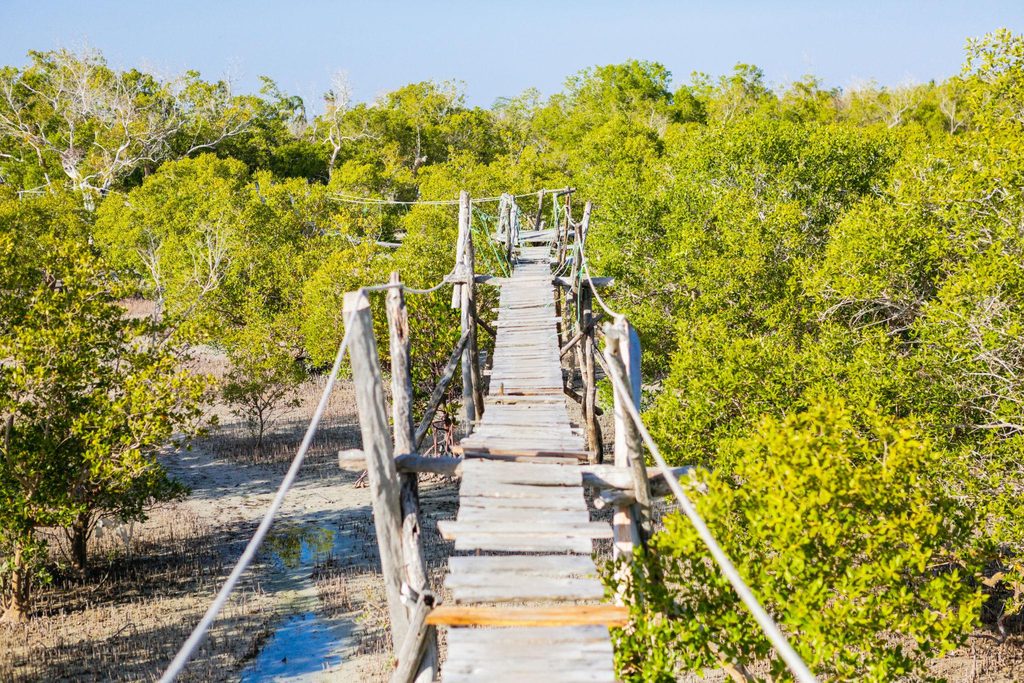
A short distance from the forest, Mida Creek offers mangroves, tidal channels and exposed mudflats. It is a valuable feeding area for resident and migratory waterbirds, and a particularly worthwhile stop for travellers who enjoy waders.
Crab-plover is one of the headline species, alongside various sand plovers, curlews, sandpipers, herons, terns and kingfishers. The precise mix changes with the season and the tide.
Timing matters more than simply arriving early. At very low tide, feeding birds may be spread across distant mudflats. As the tide rises, some move towards accessible edges and roosts. A good guide will consult the local tide table before deciding when to visit, rather than treating Mida Creek as a fixed afternoon excursion.
The creek also suits visitors who are less interested in identifying every bird. Mangrove boardwalks, local boat trips and the scenery provide an enjoyable outing, although boat activities should be arranged with experienced operators and appropriate safety equipment.
Should you also visit the Sabaki River estuary?
For dedicated birdwatchers, the Sabaki River mouth near Malindi adds another habitat: estuary, sandbanks, open water and coastal scrub. Depending on conditions and season, it can be productive for shorebirds, terns and other water-associated species.
It is worth considering if you have a full birding day or several nights on the coast. However, the birding depends on water levels, tides and access, so we would check local conditions before building an itinerary around a particular species.
For travellers whose main interest is a relaxed coastal holiday, Arabuko-Sokoke and Mida Creek are usually the most practical starting points.
Where should you stay: Watamu or Malindi?
Watamu is often our preferred base for a combination of forest birding, Mida Creek and beach time. The forest is close enough for an early start without an exhausting transfer, and there are accommodation options ranging from small guesthouses and comfortable beach hotels to more luxurious properties.
Malindi can also work well, particularly for travellers incorporating the Sabaki estuary or arriving through Malindi Airport. The best choice depends on the precise accommodation, the activities planned and how much time you want to spend travelling each day.
We would not automatically choose the most expensive hotel. For an enthusiastic birder, a comfortable property with an early breakfast, helpful staff and a practical location can be more useful than a luxury resort where every excursion requires a long drive.
How many days should you allow?
One morning in Arabuko-Sokoke gives an introduction, but it is not enough to explore the main forest habitats properly. Two mornings allow a more targeted approach, especially if Sokoke Scops Owl, East Coast Akalat or other forest specialists are priorities.
For a balanced four-night coastal stay, a sensible outline might be:
- Arrival: Transfer to Watamu and enjoy the beach or gardens around your accommodation.
- First full day: Early guided walk in Arabuko-Sokoke, followed by a relaxed afternoon.
- Second full day: Mida Creek timed around the tide, with the rest of the day free for the coast.
- Third full day: A second forest session in a different habitat, or a visit to the Sabaki estuary for dedicated birdwatchers.
- Departure: Travel onward or connect with the next part of your Kenya safari.
We would adjust the order according to tides, weather and your interests. An early start for forest birds is worthwhile, but scheduling dawn outings every day defeats the purpose if you also want time to relax.
When is the best time to visit Kenya’s coast?
Arabuko-Sokoke can be visited throughout the year, although heavy rain can affect forest tracks and walking conditions. The long rains, usually concentrated around April and May, deserve particular consideration when planning.
The northern winter, broadly from October to April, adds migratory birds to the coastal wetlands. Resident forest specialities, however, require attention to local habitat and conditions rather than a single universal ‘best month’.
Coastal weather can also influence boat trips and snorkelling. If combining a marine holiday with serious birding, we would look at the full range of activities before selecting dates.
How does the coast fit into a wider Kenya safari?
Watamu is a particularly satisfying finish to a Kenya itinerary that begins with inland wildlife reserves. The contrast is substantial: open savannah, elephants and big cats inland, followed by coastal forest, mangroves, shorebirds and the Indian Ocean.
It can also be a destination in its own right. A traveller focused on Kenya’s endemic and restricted-range birds may want to combine Arabuko-Sokoke with the Taita Hills, the central highlands and other specialist sites. Those primarily interested in a classic safari can add two or three nights on the coast without turning the trip into a birding expedition.
Our approach is to decide what you actually want from the coast before choosing the number of nights. It might be two targeted forest mornings, a single guided nature walk, several days of snorkelling and relaxation, or a little of everything.
Plan a private Kenya wildlife and coastal holiday
At Wild Birding, we create private, tailor-made Kenya holidays that bring together wildlife, birding and time to enjoy the places you visit. We can arrange specialist forest guiding, practical accommodation and a route that works for both dedicated birdwatchers and companions who prefer a more relaxed pace.
For more ideas, read our guide to Kenya birdwatching holidays or our introduction to Kenya’s endemic birds. If you are considering the coast as part of a wider safari, get in touch and we will help you plan the right combination.
No Comments