



Wild Kenya: The Grand Birding Circuit
per person
Our most comprehensive Kenya birding journey. Explore the country’s exceptional diversity of habitats over 28 days, targeting endemic birds, restricted-range specialities and sought-after species from the western rainforests and northern rangelands to the coastal forests of the Indian Ocean.
-
Destination
-
Departure
Nairobi (subject to route review) -
Dress Code
Comfortable, lightweight clothing in neutral colours, sturdy walking shoes, a sun hat and warm layers for the highlands. -
Included
Airport TransfersBirding TelescopeFull board (Breakfast, Lunch & Dinner)Handpicked Top AccommodationLed by our Professional Bird Guide & Tour LeaderMineral WaterNational Park FeesProfessional DriverUpdated Bird ChecklistVehicleWiFi
Our gallery



1
Into the Maasai Mara
Depart Nairobi for the Maasai Mara (approximately 5–6 hours), descending into the Great Rift Valley before continuing through the rolling grasslands of southern Kenya.
Our journey begins with opportunities to encounter a variety of open-country birds, including White-bellied Bustard, Rufous-naped Lark, Long-tailed Fiscal and several species of raptor.
After settling into our accommodation, we'll spend the afternoon exploring the Mara's grasslands and scattered acacia woodland, beginning our search for the region's characteristic bird species.
Overnight: Maasai Mara.
2
Grassland Specialities of the Maasai Mara
A full day of dedicated birding across the Maasai Mara's extensive grasslands, seasonal wetlands and riverine woodland.
We'll target Secretarybird, Southern Ground Hornbill, Denham's Bustard, Temminck's Courser, Coqui Francolin, Sooty Chat, Rufous-naped Lark and various cisticolas.
The Mara is particularly rewarding for raptors, with possibilities including Martial Eagle, Bateleur, Tawny Eagle, Lappet-faced Vulture, White-headed Vulture and African White-backed Vulture.
Alongside our birding, we'll enjoy opportunities to observe the Mara's remarkable populations of large mammals.
Overnight: Maasai Mara.
3
Rosy-throated Longclaw & Riverine Habitats
Today we'll concentrate on more specialised habitats within the Mara ecosystem, particularly seasonally damp grasslands and riverine vegetation.
Rosy-throated Longclaw will be an important target, alongside Rufous-bellied Heron, Black Coucal, Croaking Cisticola, Yellow-throated Longclaw and other grassland and wetland specialities.
Riverine woodland provides a contrasting bird community, with opportunities for Schalow's Turaco, Ross's Turaco, African Blue Flycatcher and a variety of forest-edge species.
Our route will remain flexible according to recent sightings and outstanding target birds.
Overnight: Maasai Mara.
4
Towards Lake Victoria
Depart the Maasai Mara for Kisumu and the shores of Lake Victoria (approximately 5–7 hours, depending on our route).
The changing landscape introduces us to a different bird community, with opportunities to explore agricultural habitats, woodland and wetlands along the way.
If time permits, we'll begin birding around Lake Victoria's shoreline, searching for African Jacana, Long-toed Lapwing, African Swamphen, Pied Kingfisher and other wetland species.
Overnight: Kisumu.
5
Papyrus Specialities of Lake Victoria
Dedicate today to the highly specialised bird communities associated with Lake Victoria's papyrus wetlands.
Our principal targets include Papyrus Gonolek, White-winged Swamp Warbler, Carruthers's Cisticola, Greater Swamp Warbler, Northern Brown-throated Weaver and Blue-headed Coucal.
These species can be remarkably localised, making knowledge of suitable habitat and productive access points particularly important.
We'll explore a selection of wetlands and shoreline habitats, allowing sufficient time for patient observation and targeted searches.
Overnight: Kisumu.
6
Into Kakamega Forest
Travel north to Kakamega Forest (approximately 1.5–2 hours), an eastern outlier of the Guineo-Congolian rainforest system and one of Kenya's most important birding destinations.
The forest supports a remarkable assemblage of species found nowhere else in Kenya or restricted to a handful of western localities.
Our initial exploration will focus on forest edges, canopy activity and productive trails, with possibilities including Great Blue Turaco, Black-and-white-casqued Hornbill, Blue-headed Bee-eater, Yellow-billed Barbet and African Blue Flycatcher.
Overnight: Kakamega Forest.
7
Kakamega's Guineo-Congolian Specialities
A full day of specialist forest birding, exploring different forest strata, mixed-species feeding flocks and mature rainforest habitats.
Our targets include Turner's Eremomela, Chapin's Flycatcher, Uganda Woodland Warbler, Yellow-bellied Wattle-eye, Jameson's Wattle-eye, Brown-chested Alethe, Grey-winged Robin-chat and Yellow-spotted Barbet.
We'll also search for African Broadbill, White-spotted Flufftail and Crowned Eagle, alongside the forest's diverse greenbuls, sunbirds and forest flycatchers.
Forest birding requires patience, careful listening and an understanding of species-specific behaviour, and we'll adapt our activities according to calling birds and feeding-flock movements.
Overnight: Kakamega Forest.
8
From Rainforest to the Rift Valley
Following a final early morning birding session in Kakamega Forest, depart towards Lake Baringo (approximately 4–5 hours).
Descending from the western highlands into the Great Rift Valley, we'll encounter a dramatic transition from humid rainforest to semi-arid bushland and rocky escarpments.
An afternoon birding session around Lake Baringo will introduce us to species such as Bristle-crowned Starling, Northern Masked Weaver, White-billed Buffalo-Weaver and Jackson's Hornbill.
Overnight: Lake Baringo.
9
Lake Baringo's Owls, Nightjars & Dry-Country Birds
Spend a full day exploring Lake Baringo's rocky cliffs, acacia woodland, dry bushland and freshwater habitats.
Working with local birding expertise, we'll search suitable sites for Northern White-faced Owl, Greyish Eagle-Owl, Verreaux's Eagle-Owl, Slender-tailed Nightjar and other nocturnal specialities.
Additional targets include Jackson's Hornbill, Hemprich's Hornbill, Bristle-crowned Starling, Mouse-coloured Penduline Tit, Pygmy Batis and Northern Masked Weaver.
A boat excursion, subject to local conditions, provides opportunities to explore the lake's waterbird communities and photograph species such as African Fish Eagle and Malachite Kingfisher.
Overnight: Lake Baringo.
10
Lake Bogoria & the Flamingo Lakes
Depart Lake Baringo and explore Lake Bogoria National Reserve, continuing afterwards towards the Lake Nakuru area (approximately 3–4 hours of driving, excluding birding stops).
Lake Bogoria's alkaline waters, geothermal activity and surrounding dry woodland support a distinctive bird community. When conditions are favourable, the lake can hold impressive concentrations of Lesser Flamingos.
We'll adapt our choice of lake according to current flamingo movements, water levels and accessibility, with Lake Elementaita providing an alternative or additional birding location.
Overnight: Lake Nakuru area.
11
Lake Nakuru National Park
Explore the varied habitats of Lake Nakuru National Park, including alkaline shoreline, mature acacia woodland, rocky escarpments and open grasslands.
Birding targets may include Hildebrandt's Starling, Grey-crested Helmetshrike, Arrow-marked Babbler, White-fronted Bee-eater, Brown-backed Scrub Robin and a variety of raptors.
The lake supports pelicans, flamingos, grebes, waders and other waterbirds, with species composition influenced by changing water levels.
Lake Nakuru also offers excellent opportunities to encounter Black and White Rhinos, Rothschild's Giraffes and other large mammals.
Overnight: Lake Nakuru area.
12
Kinangop Plateau & Sharpe's Longclaw
Travel towards the high-altitude grasslands of the Kinangop Plateau, one of the most important remaining strongholds for Kenya's endemic Sharpe's Longclaw.
We'll concentrate our efforts on suitable tussock grassland, searching for this increasingly threatened species alongside Wing-snapping Cisticola, Hunter's Cisticola and other highland birds.
Where possible, we'll incorporate local conservation initiatives into our visit, gaining an understanding of the pressures facing Kenya's remaining natural grasslands.
Continue to Lake Naivasha, with approximately 2–3 hours of driving throughout the day, excluding birding stops.
Overnight: Lake Naivasha.
13
Lake Naivasha & Acacia Woodland
Spend today exploring Lake Naivasha's freshwater habitats, surrounding acacia woodland and lakeside vegetation.
A boat safari offers opportunities for African Fish Eagle, Giant Kingfisher, Malachite Kingfisher, African Jacana, African Swamphen and a wide variety of herons and cormorants.
The surrounding woodland supports a contrasting assemblage of birds, including Grey-backed Fiscal, Red-throated Wryneck, Bearded Woodpecker, Grey-capped Warbler and various sunbirds.
We'll also use today to pursue any outstanding Rift Valley targets at suitable nearby sites.
Overnight: Lake Naivasha.
14
Aberdare Highlands & Endemic Birds
Travel towards the Aberdare Highlands (approximately 2.5–4 hours, depending on our chosen access point), exploring suitable high-altitude grassland, moorland and forest-edge habitats.
Our principal targets include the endemic Aberdare Cisticola and near-endemic Jackson's Spurfowl, alongside Moorland Chat, Alpine Chat, Scarlet-tufted Sunbird and other high-altitude specialities where suitable habitat is accessible.
The day's birding will be carefully planned around altitude, weather conditions and the most productive sites for our target species.
Overnight: Aberdare Highlands area.
15
Mount Kenya's Montane Forests
Continue towards the forested slopes of Mount Kenya (approximately 2–3 hours), exploring one of East Africa's most important montane birding regions.
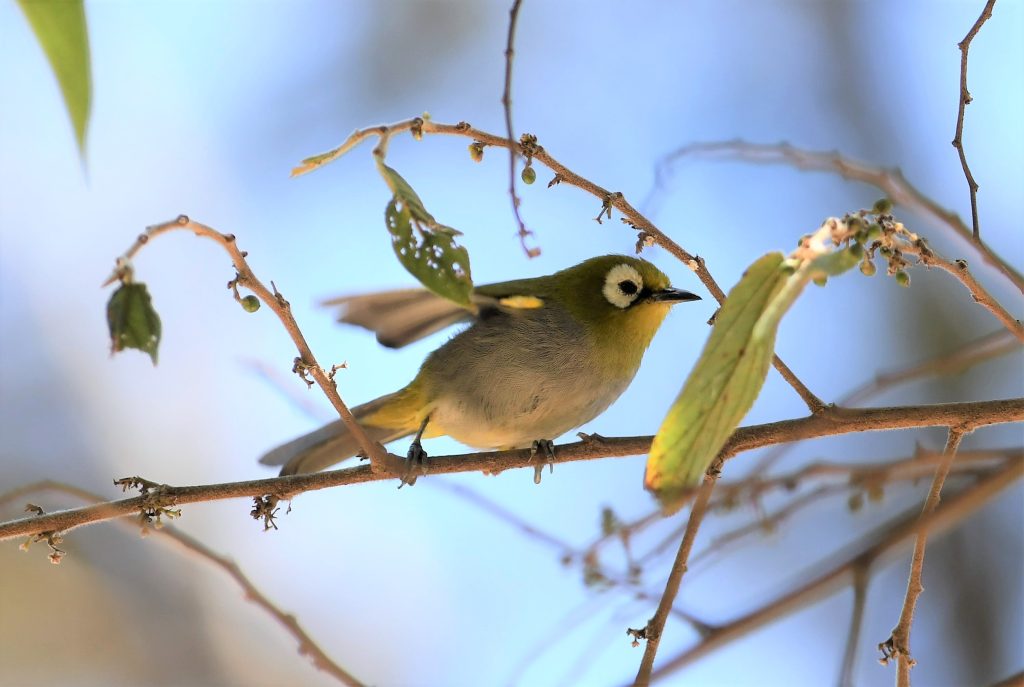
We'll search forest edges, mature woodland and productive feeding flocks for Kikuyu White-eye, Hartlaub's Turaco, Mountain Wagtail, White-starred Robin, Black-fronted Bushshrike and Golden-winged Sunbird.
The diversity of habitats around Mount Kenya allows us to explore different elevations according to our target list and recent bird activity.
Overnight: Mount Kenya area.
16
Specialist Montane Forest Birding
A full day of targeted birding within Mount Kenya's montane forests and surrounding habitats.
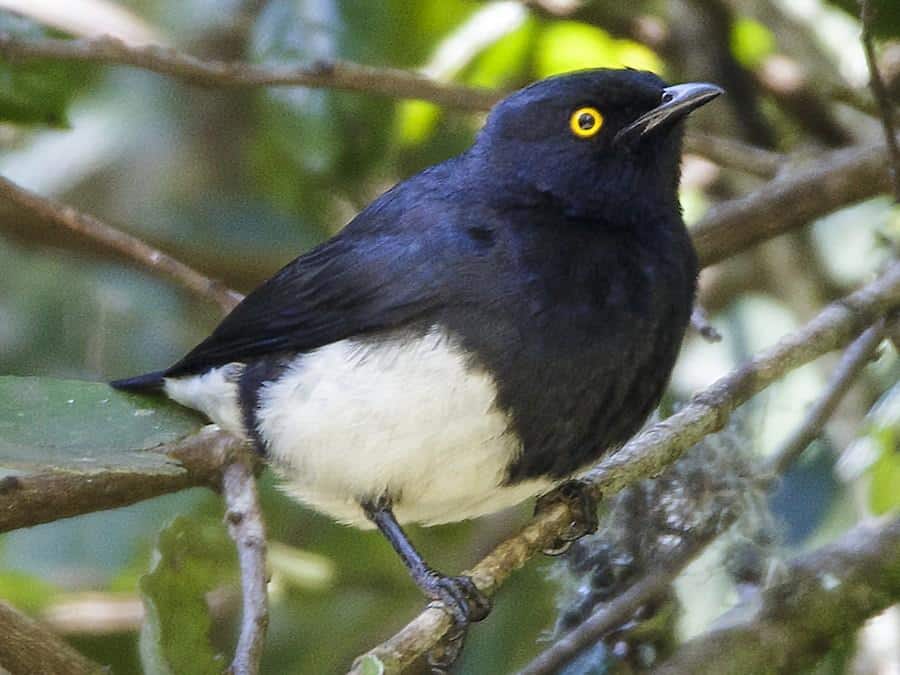
Particular attention will be given to more challenging forest species, including Abbott's Starling, Kenrick's Starling, Bar-tailed Trogon, African Crowned Eagle, Abyssinian Ground Thrush and several species of montane greenbul. We'll explore productive forest trails, canopy openings and mixed-species feeding flocks, adjusting our choice of sites according to recent records and outstanding targets. Overnight: Mount Kenya area.17
Shaba & Williams's Lark
Descend from the central highlands into northern Kenya's semi-arid rangelands (approximately 3–4 hours).
The transition into the Somali-Masai biome introduces an entirely different bird community, characterised by species adapted to dry bushland, rocky terrain and open semi-desert.
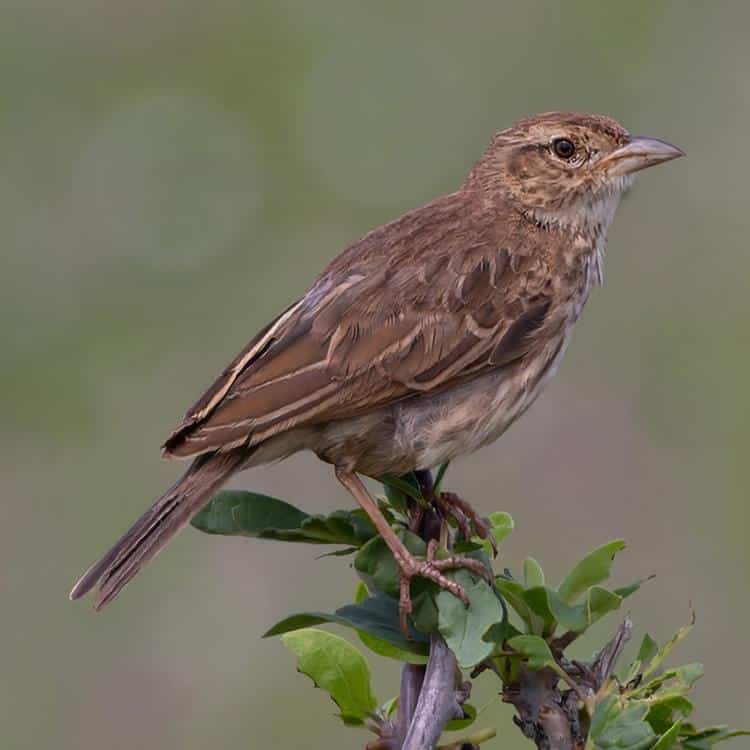
One of our principal objectives in this region will be the endemic Williams's Lark, with dedicated searches at suitable sites within its restricted geographical range.
Other possibilities include Somali Courser, Chestnut-headed Sparrow-Lark, Golden-breasted Starling and Somali Bee-eater.
Overnight: Shaba or Samburu area.
18
Samburu's Somali-Masai Specialities
Spend a full day exploring Samburu National Reserve, focusing on its dry acacia woodland, open bushland and riverine habitats along the Ewaso Nyiro.
Our targets include Vulturine Guineafowl, Somali Ostrich, Golden-breasted Starling, Donaldson Smith's Sparrow-Weaver, White-headed Mousebird, Pringle's Puffback, Rosy-patched Bushshrike and Black-capped Social Weaver.
The region is also renowned for its distinctive mammals, including Grevy's Zebra, Reticulated Giraffe, Gerenuk and Beisa Oryx.
Overnight: Shaba or Samburu area.
19
Buffalo Springs & Northern Dry-Country Birds
Continue our exploration of northern Kenya in Buffalo Springs National Reserve and other productive habitats within the surrounding ecosystem.
We'll concentrate on outstanding regional specialities, with possibilities including Somali Bee-eater, Somali Courser, Pink-breasted Lark, Red-winged Lark, African Orange-bellied Parrot, Northern Crombec and Acacia Tit.
The flexibility of private guiding allows us to revisit productive sites or dedicate additional time to Williams's Lark should further searches be required.
Overnight: Shaba or Samburu area.
20
Hinde's Babbler & Central Kenya
Depart northern Kenya and travel south towards Nairobi, incorporating a targeted search for the endemic Hinde's Babbler at a suitable locality in central Kenya.
This highly localised species favours dense thickets, riverine scrub and suitable secondary vegetation, including habitats within agricultural landscapes.
Our precise birding location will be selected according to recent sightings, accessibility and the most appropriate route towards Nairobi.
Allow approximately 6–8 hours of driving today, depending on our chosen birding sites.
Overnight: Nairobi.
21
Into the Tsavo Wilderness
Depart Nairobi for Tsavo East National Park (approximately 5–6 hours), travelling south-east towards one of Kenya's largest wilderness areas.
Tsavo's extensive dry bushland, open plains and riverine woodland support a rich assemblage of Somali-Masai and East African dry-country birds.
Our afternoon birding may produce Golden-breasted Starling, Red-and-yellow Barbet, White-headed Buffalo-Weaver, Eastern Chanting Goshawk and various species of hornbill and bustard.
Overnight: Tsavo East National Park.
22
Tsavo's Dry-Country Specialities
A full day of targeted birding across Tsavo East's extensive wilderness, exploring open plains, dry scrub and riverine habitats.
Among our more specialised targets will be Friedmann's Lark, a particularly elusive and irregularly encountered species, with searches guided by recent records, rainfall and suitable habitat.
Additional possibilities include Somali Bee-eater, Somali Courser, Red-winged Lark, Scaly Chatterer, Pringle's Puffback, Three-streaked Tchagra and Golden Pipit.
Tsavo also offers excellent opportunities to encounter elephants, lions, giraffes and other large mammals within a vast and relatively undeveloped landscape.
Overnight: Tsavo East National Park.
23
The Taita Hills Biodiversity Hotspot
Travel towards the isolated Taita Hills (approximately 2–3 hours), whose fragmented montane forests form part of the internationally important Eastern Arc biodiversity hotspot.
These forests support three highly localised Kenyan endemic bird species, making the Taita Hills an essential component of any comprehensive specialist Kenya birding itinerary.
We'll begin our targeted searches for Taita Thrush and Taita White-eye, exploring suitable forest fragments with local expertise.
Overnight: Taita Hills area.
24
Taita Apalis & Endemic Forest Birds
Dedicate a further full day to the Taita Hills, with particular attention to the critically endangered Taita Apalis and any outstanding endemic targets.
We'll visit appropriate forest fragments according to recent sightings, habitat conditions and local access arrangements.
Other possibilities include regional forest specialities such as Stripe-cheeked Greenbul and the distinctive local populations of several montane bird species.
The fragmented nature of these forests highlights the importance of ongoing habitat protection and restoration, offering a fascinating insight into the conservation of Kenya's most threatened birds.
Overnight: Taita Hills area.
25
From the Taita Hills to Mida Creek
Following a final opportunity to search for outstanding Taita Hills specialities, descend towards Kenya's Indian Ocean coast (approximately 4–5 hours).
If tidal conditions and arrival times are favourable, we'll explore Mida Creek, an extensive system of mangroves, tidal mudflats and shallow coastal waters.
Principal targets include Crab-plover, Terek Sandpiper, Greater and Lesser Sand Plovers, Grey Plover, Whimbrel and a variety of coastal terns, depending on season.
Overnight: Watamu.
26
Arabuko-Sokoke Forest
Begin our exploration of Arabuko-Sokoke Forest, one of the most important remaining coastal forests in East Africa.
Its contrasting Brachystegia woodland, mixed forest and Cynometra thickets support distinct bird communities, including several highly threatened and restricted-range species.
Our principal targets include Sokoke Pipit, East Coast Akalat, Amani Sunbird, Plain-backed Sunbird, Fischer's Turaco and Little Yellow Flycatcher.
A dedicated search for the diminutive Sokoke Scops Owl will be arranged with local forest birding expertise, subject to appropriate access and responsible birding practices.
Overnight: Watamu.
27
Clarke's Weaver & Coastal Forest Specialities
A further full day dedicated to the coastal region's most sought-after birds, with particular emphasis on the endemic Clarke's Weaver, also known as Kilifi Weaver.
Depending on recent sightings and seasonal movements, we may explore additional areas of Arabuko-Sokoke Forest or travel to suitable habitats within the Dakatcha Woodland landscape.
We'll also dedicate time to any outstanding forest targets, including Sokoke Pipit, East Coast Akalat, Amani Sunbird and other coastal specialities.
This additional day provides valuable flexibility when searching for some of Kenya's most localised and challenging bird species.
Overnight: Watamu.
28
Sabaki River Estuary & Farewell to Kenya
Our final morning takes us to the Sabaki River Estuary, where freshwater, tidal mudflats, sandbanks and coastal vegetation support an impressive diversity of birds.
Depending on the season and tidal conditions, possibilities include Madagascar Pratincole, Sooty Gull, Lesser Crested Tern, Greater Crested Tern, Dimorphic Egret and numerous migratory waders.
Following our final birding session, transfer to Malindi Airport for a scheduled domestic flight to Nairobi, where onward arrangements will be coordinated according to your international departure.
For guests with outstanding target species or additional birding interests, the journey can readily be extended.


01
Kenya's Endemic Birds
A comprehensive itinerary designed to target all nine generally recognised extant Kenyan endemic bird species, from Sharpe's Longclaw and Williams's Lark to the highly threatened forest birds of the Taita Hills.02
An Extraordinary Diversity of Habitats
Explore the meeting point of several African bird communities, encompassing Guineo-Congolian rainforest, Somali-Masai bushland, montane forest, high-altitude grassland, papyrus wetlands and East African coastal forest.03
Restricted-Range Specialities
Dedicate time to some of East Africa's most sought-after birds, including Turner's Eremomela, Abbott's Starling, Friedmann's Lark, Sokoke Pipit, East Coast Akalat and Sokoke Scops Owl.04
Birding Beyond the Established Circuit
Explore specialised habitats beyond the better-known national parks, including remnant highland grasslands, isolated forest fragments, papyrus swamps and productive areas of coastal woodland.05
Bird Conservation & Natural History
Gain an appreciation of the ecological importance of Kenya's most threatened habitats, the pressures facing restricted-range species and the conservation initiatives working to protect them.06


