



14 Nov Bangweulu Wetlands: When to See Shoebills and Black Lechwe in Zambia
Some of Africa’s most rewarding wildlife experiences take place far from its famous big-game parks. Zambia’s Bangweulu Wetlands is one of them. Here, vast seasonal floodplains support herds of black lechwe, while the swamps shelter one of the continent’s most sought-after birds: the Shoebill.
Bangweulu is not a conventional luxury safari destination. Access can be difficult, accommodation is limited and water levels determine what is possible on any given day. But for travellers interested in specialist wildlife, birds and conservation, it offers something genuinely different. The key is choosing the right season and building enough flexibility into the itinerary.
What makes Bangweulu different?
Bangweulu covers roughly 6,000 square kilometres of permanent swamps, seasonally flooded grassland, floodplain and miombo woodland. It is a working landscape, shared by wildlife and fishing communities, rather than an empty wilderness set aside exclusively for tourism. African Parks manages the area in partnership with Zambia’s Department of National Parks and Wildlife and local communities.
That mixture of habitats explains its appeal. The open plains are important for black lechwe, an antelope closely associated with Bangweulu. The deeper wetland channels provide feeding habitat for Shoebills, while the surrounding woodland adds an entirely different bird community. African Parks reports more than 400 bird species across the ecosystem, including an important population of Wattled Cranes.
When is the best time to see a Shoebill?
May to July is generally the most useful starting point for a Shoebill-focused itinerary. African Parks identifies these months as a particularly good period for Shoebills and black lechwe as the rains ease and the floodwaters begin to recede. It also notes that Shoebills become significantly harder to locate from September onwards as the birds follow changing water levels.
That does not mean every May or June trip will be straightforward. The timing of the rains, the condition of access roads and the availability of boats all affect the search. Some other travel guides recommend an earlier window, but for a practical itinerary we would place greater weight on the latest information from the people managing the wetlands and guiding visitors on the ground.
Allow at least two nights in the Bangweulu area if the Shoebill is a priority, and preferably more when the wider itinerary permits. One rushed visit leaves little room for delays or a change in where the birds are feeding. A sighting should never be promised: this is a wild bird in an extensive wetland, not a guaranteed attraction.
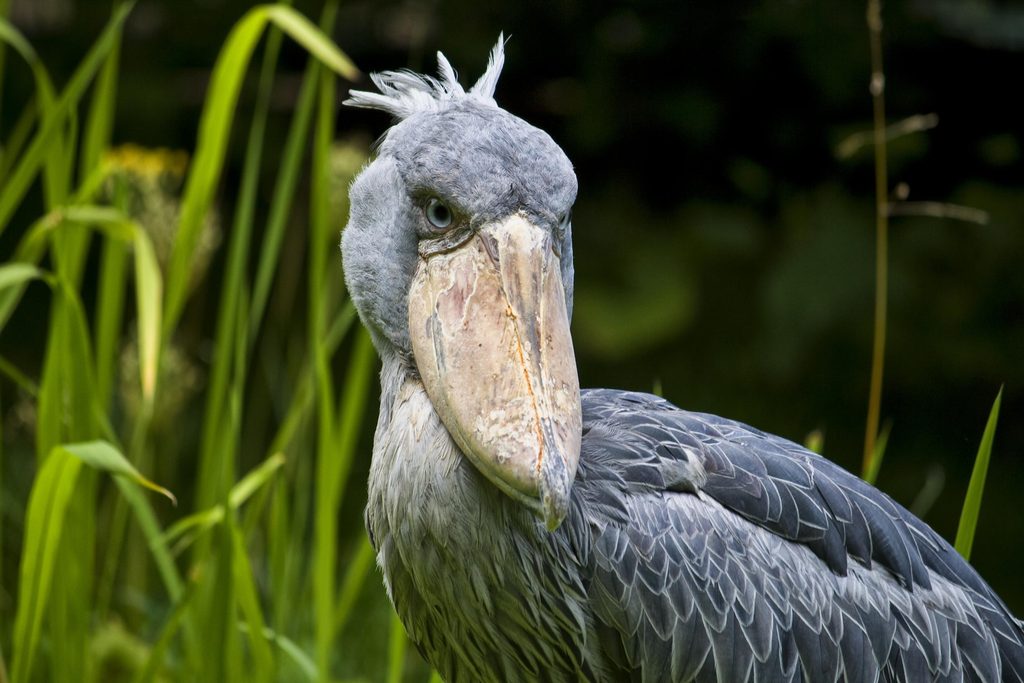
How are Shoebills found?
Depending on the season and water levels, the search may involve a vehicle transfer, walking and a trip by canoe or boat through the channels. Local guides are particularly important because the wetland changes throughout the year. A route that works one month may be inaccessible the next.
Photographers should bring a telephoto lens and be prepared to work from an unstable platform or wet ground. Binoculars are essential even for non-birders. The objective should be a responsible encounter at a sensible distance, with the bird free to continue feeding or resting undisturbed. Breeding birds and nesting areas deserve particular care.
Black lechwe: an equally compelling reason to visit
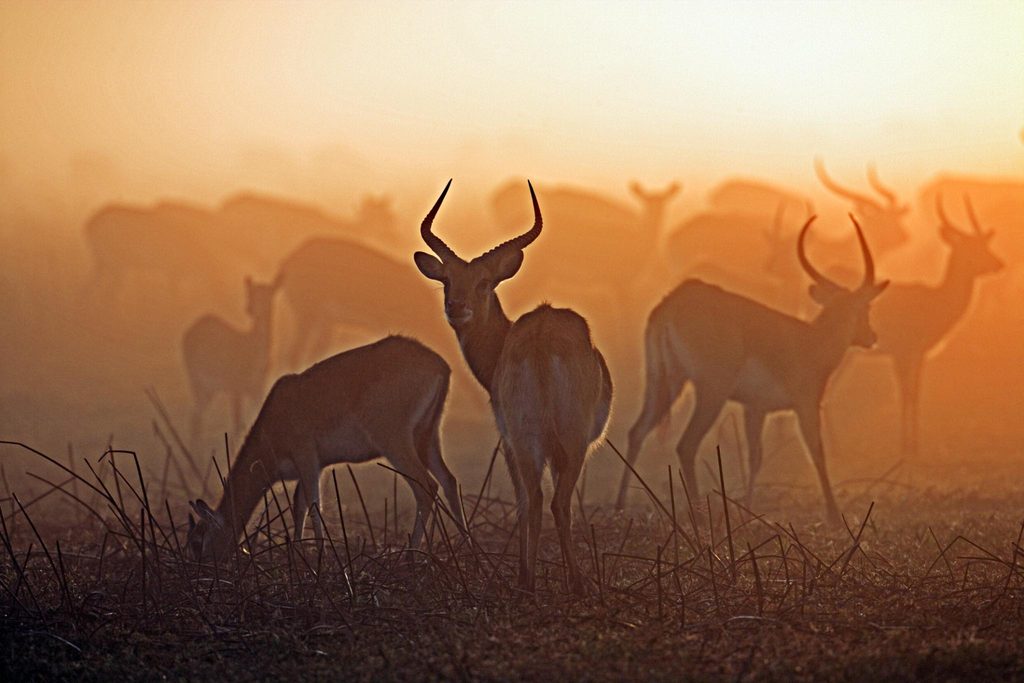
It would be a mistake to treat Bangweulu as a one-bird destination. The black lechwe is a distinctive, wetland-adapted antelope and the floodplains can hold extraordinary concentrations of animals. As the water recedes, lechwe spread across fresh grazing, sometimes in large, photogenic herds.
June and July are especially attractive for travellers who want to combine Shoebills with the lechwe spectacle. Later in the dry season, access to some grassland areas can become easier, but the Shoebill search may be less productive. This is one of the central trade-offs when choosing dates.
Other wildlife may include tsessebe, sitatunga and, in suitable areas, buffalo and predators. However, Bangweulu should not be sold as a substitute for South Luangwa or the Lower Zambezi if the main objective is frequent sightings of lions, leopards and elephants.
Birding beyond the Shoebill
Bangweulu’s wider birdlife is substantial. Wattled Crane is an important target on the open floodplains, while African Jacana, African Swamphen and Saddle-billed Stork are among the wetland species worth looking for. The precise mix changes with water levels, habitat and season.
The surrounding miombo woodland is also worth time, particularly for travellers interested in building a varied Zambia bird list rather than making a single species dash into the swamp. A good itinerary should leave room for both the floodplain and woodland habitats.
Where to stay: comfort versus location
Shoebill Island Camp
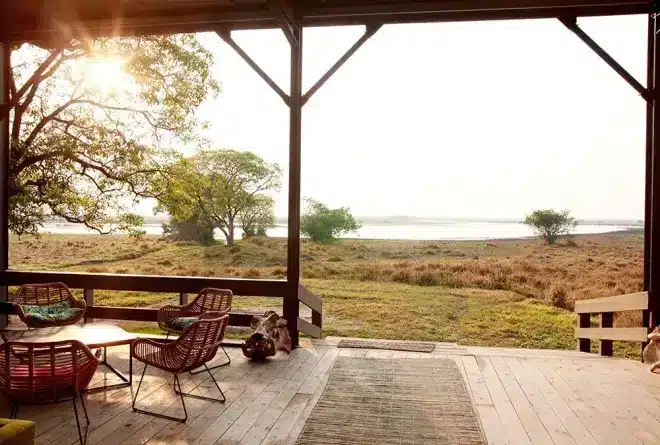
African Parks describes Shoebill Island Camp as an intimate four-tent camp in the Lukulu delta, with access to wetland excursions and views over a lagoon. Its appeal is location and immersion in the swamp, rather than the facilities of a high-end safari lodge. The operator’s published visitor guidance states that the camp generally opens on 1 May, although actual operating arrangements should be reconfirmed for the year of travel.
Nkondo Tented Camp
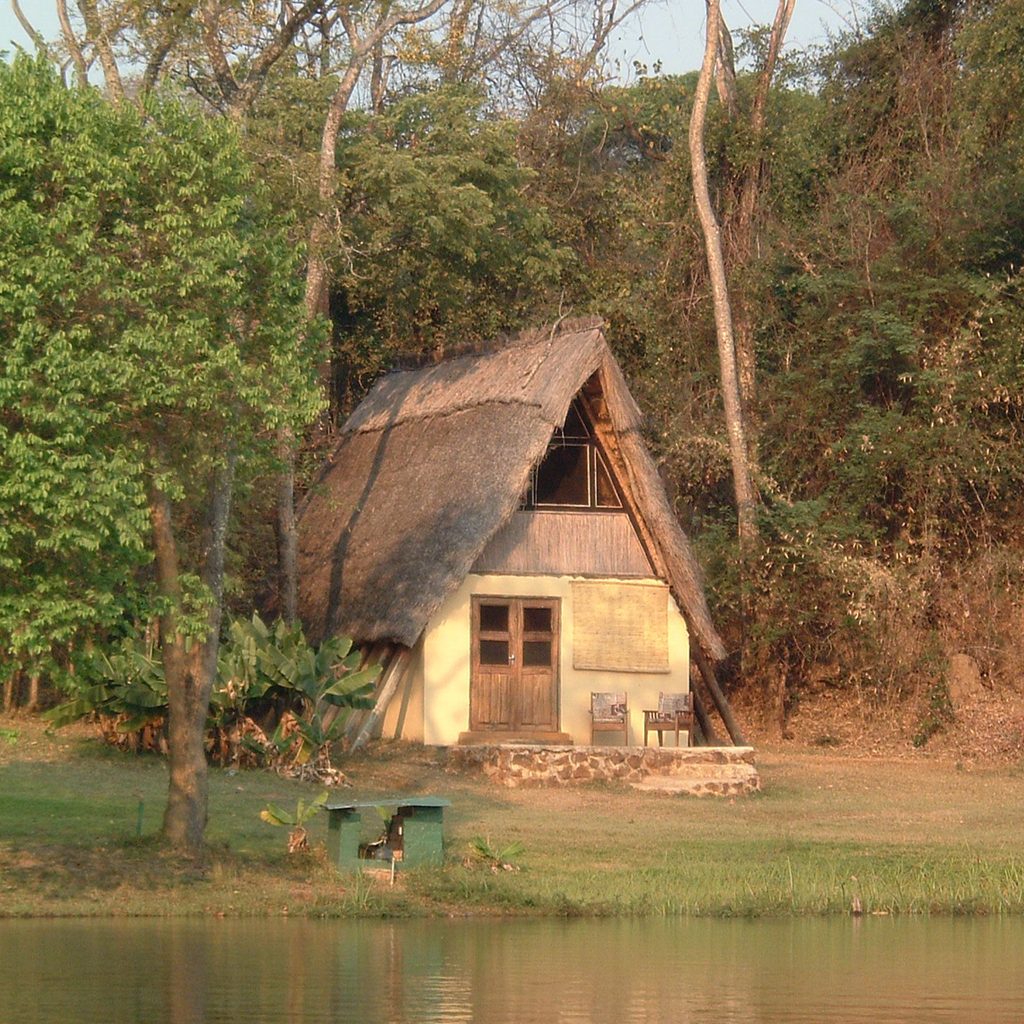
Nkondo has six en-suite tents in miombo woodland and is a useful alternative or staging point when water levels restrict access to the plains. African Parks notes that it is roughly two hours from the swamp. That matters: an apparently comfortable base can mean an earlier start and additional transfer time on Shoebill-search days.

Nsobe Campsite
Nsobe is a more basic camping option near the floodplain. Its operating season is dependent on water levels, generally around May to November. It may suit adventurous travellers, but it is not interchangeable with a tented lodge. Before booking, confirm the exact facilities, transfers and whether the preferred activities can operate.
Getting to Bangweulu without exhausting the itinerary
Bangweulu requires more logistical thought than many better-known safari destinations. A road itinerary needs a suitable 4×4, realistic driving days and a contingency for wet or damaged tracks. A charter flight can reduce time on the road, but airstrip usability is seasonal. African Parks advises that Inja airstrip is relevant for early-season arrivals and that Chimbwi is generally dry from June, subject to confirmation.
For a tailor-made holiday, we would usually avoid treating Bangweulu as a quick detour from Lusaka. It works better as part of a deliberately paced northern Zambia journey, potentially alongside Kasanka and other specialist wildlife areas. South Luangwa can provide a contrasting conventional big-game safari, although the transfer logistics and any flights must be assessed carefully.
There is also a seasonal trap worth knowing about: Kasanka’s famous straw-coloured fruit bat gathering is associated with the later months of the year, not the principal May–July Bangweulu Shoebill window. Both destinations can feature in a northern Zambia itinerary, but expecting the peak bat migration and the best Shoebill conditions on the same short trip is usually unrealistic.
Who should go — and who might prefer somewhere else?
Bangweulu suits patient birders, wildlife photographers and travellers who value unusual ecosystems over polished luxury. It can also appeal to safari veterans looking for a different side of Zambia, particularly the relationship between conservation, fishing communities and wildlife.
It is less suitable for someone who needs predictable transfers, easy walking surfaces or high-end accommodation throughout. Mud, uneven ground, wet embarkation points and long journeys may be part of the experience. Travellers with mobility requirements should discuss the exact arrangements before committing, rather than relying on generic descriptions of a camp.
Conservation is part of the story
Bangweulu is a Ramsar-listed wetland of international importance. African Parks reports recovery in several wildlife populations following conservation work with the Zambian authorities and communities, and its Shoebill programme includes rescue and rehabilitation efforts. The wetlands are also home to people whose livelihoods depend on fishing and seasonal access to the water.
That makes the choice of guides, operators and accommodation more than a question of convenience. Responsible tourism should support the conservation model and local livelihoods without disturbing birds or treating fishing communities as a spectacle.
Planning a Zambia safari around Bangweulu
Our approach would be to start with the species and experiences that matter most, then work backwards to the season, transfers and accommodation. If Shoebill is the principal target, May to July is a sensible first window. If general big-game viewing, luxury camps or the Kasanka bat migration matter more, a different route or season may be better.
At Wild Birding, we plan private, tailor-made wildlife and birding holidays, balancing specialist sightings with the realities of travel. If Bangweulu is on your wishlist, get in touch and we can discuss how to incorporate it into a wider Zambia journey without making the holiday feel like a race between destinations.
No Comments