



16 Nov Samburu or Ol Pejeta? Choosing the Right Northern Kenya Safari
There is a tempting tendency to treat northern Kenya as a single stop between Nairobi and the Masai Mara. In practice, two of its best-known wildlife areas, Samburu National Reserve and Ol Pejeta Conservancy, offer quite different experiences. One is defined by dry-country wildlife, riverine woodland and a distinctive northern landscape; the other combines excellent general game viewing with an unusually strong conservation focus. Both deserve consideration, but the better choice depends on what you want to see and how much time you have.
What makes Samburu different?
Samburu lies north of Mount Kenya, where the country becomes noticeably hotter and drier. The Ewaso Ng’iro River is central to the reserve’s wildlife, drawing elephants and other animals towards its banks and supporting ribbons of doum palms and woodland through otherwise open country. The combination of rocky hills, arid scrub and river habitat makes this feel very different from the Mara.
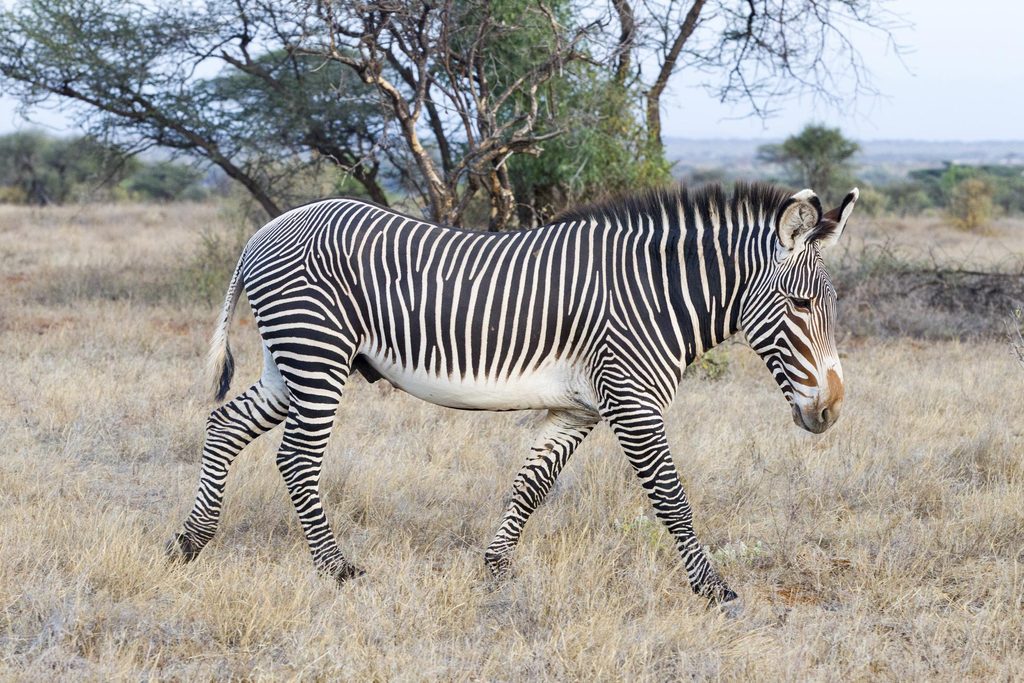
The best-known targets are the so-called Samburu Special Five: Grevy’s zebra, reticulated giraffe, gerenuk, beisa oryx and Somali ostrich. They are not all restricted to Samburu, and their distributions extend across parts of northern Kenya and beyond, but seeing several in a relatively compact area is a compelling reason to visit. Gerenuk are particularly entertaining to watch when feeding upright on their hind legs; Grevy’s zebra are immediately recognisable by their narrow stripes and large ears.
Elephants are another major attraction. Along the river, patient observation can be more rewarding than driving from sighting to sighting. Samburu also supports lions, leopards and other predators, although sightings are never guaranteed. Birders should pay attention to the change in habitat: dry-country species such as vulturine guineafowl, Somali bee-eater, golden-breasted starling and various hornbills make this a useful complement to Kenya’s highland forests and Rift Valley lakes. Species records vary by locality and season, so a specialist guide matters.
What makes Ol Pejeta different?
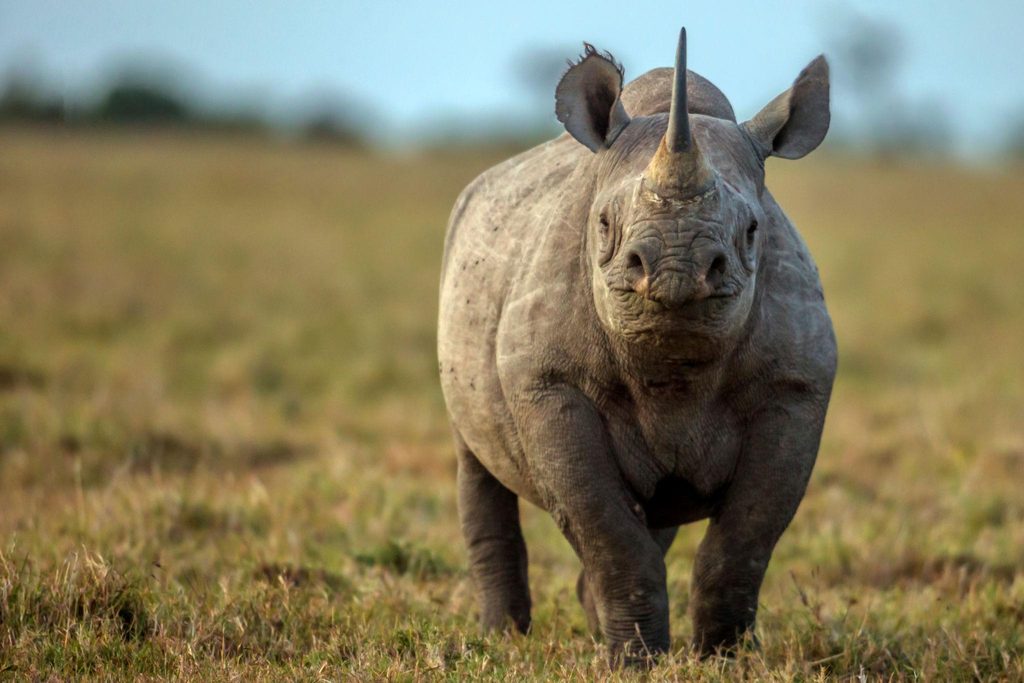
Ol Pejeta, on the Laikipia plateau near Nanyuki, is a managed conservancy with a markedly different emphasis. It supports a wide range of savannah wildlife, including elephants, lions and both black and southern white rhinos. The conservancy’s rhino-protection work is central to its identity; it also safeguards the world’s last two surviving northern white rhinos. An optional, separately arranged conservation encounter can provide context that an ordinary game drive cannot.
Ol Pejeta is also home to Sweetwaters Chimpanzee Sanctuary, which provides lifelong refuge for rescued chimpanzees. This is an important distinction: chimpanzees are not native to Kenya, and visiting the sanctuary is a conservation and welfare experience, not a wild chimpanzee trek. Those wanting to track wild chimpanzees should look instead at destinations such as Uganda or Tanzania.
Ol Pejeta works particularly well for travellers who want varied wildlife viewing without sacrificing opportunities to learn how conservation is managed on the ground. Activities such as rhino monitoring, guided walks and night drives may be available subject to booking, age restrictions, operating conditions and separate charges. Confirm the current programme before building a trip around a particular experience.
Samburu versus Ol Pejeta: the wildlife trade-off
For unusual mammals
Choose Samburu if Grevy’s zebra, reticulated giraffe, gerenuk and other northern specialists are high on your list. It is one of the clearest ways to add species and habitats that a classic southern Kenya safari might miss.
For rhinos and conservation
Choose Ol Pejeta if rhinos are a priority or you would like a more structured insight into conservation. It is also a sensible option for families and mixed-interest groups, provided the itinerary allows enough time for both game drives and educational visits.
For birdwatching
Neither is simply ‘better’. Samburu offers a distinctive dry-country assemblage and excellent opportunities to combine birding with mammal viewing along the river. Ol Pejeta’s grassland, woodland and wetland edges provide a different mix, and its cooler plateau setting may be more comfortable for long days in the field. A keen birder travelling through Kenya often gains more from including both habitats than from adding a third night in only one.
For photography
Samburu’s ochre earth, doum palms and open riverbeds give photographs a strong sense of place. Ol Pejeta offers rhino subjects and varied savannah backdrops, sometimes with Mount Kenya visible in clear weather. The more important practical question is whether your vehicle and guide can accommodate long, unhurried stops, good positioning and early departures. A private vehicle is often a better investment than a more expensive room if photography is the main purpose of the journey.
Where should you stay?
Accommodation location changes the experience as much as the room itself. In Samburu, a camp close to the reserve’s main wildlife areas can reduce travel time at dawn and dusk. Staying in an adjacent community conservancy can provide a quieter setting and, where authorised, activities such as guided walks or night drives. The trade-off is that reaching the reserve’s river corridor may involve a transfer, so a beautiful lodge outside the reserve is not automatically the most efficient choice for intensive wildlife viewing.
Saruni Samburu, for example, is in Kalama Conservancy rather than inside Samburu National Reserve. Its hilltop villas and conservancy setting are attractive for travellers seeking privacy and a broader northern Kenya experience. But anyone whose chief aim is repeated early-morning sessions along the Ewaso Ng’iro should consider the transfer time carefully. This is precisely the sort of detail that can be lost when choosing a camp by photographs alone.
At Ol Pejeta, Sweetwaters Serena Camp offers a substantial, comfortable tented-camp option within the conservancy, while Porini Rhino Camp is a smaller, more intimate camp with a conservation-oriented approach. Neither is inherently the right answer for everyone. Compare room configuration, guiding arrangements, meal plans, the distance to activities and whether conservancy fees are included. Families should also check minimum ages and whether a private vehicle is necessary.
When is the best time to visit?
Both areas can be visited throughout much of the year, but weather affects the experience. In Samburu, the generally drier periods of January–February and June–September can concentrate wildlife around water and make tracks easier to use. The hotter, dry-country conditions are part of the appeal, though midday outings can be tiring. Rain can transform the landscape and bring interesting bird activity, but heavy showers may affect some roads.
Ol Pejeta’s higher elevation means cooler mornings and evenings, and the conservancy remains worthwhile in both dry and greener periods. For travellers combining the two, it is sensible to pack layers rather than assume that all of northern Kenya will have Samburu’s temperatures. Seasonal patterns are not guarantees; ask about current road conditions and rainfall close to departure.
How to combine them without wasting a day
The most useful advice is not to rush. Travellers arriving in Nairobi can drive north via the Mount Kenya region, visit Ol Pejeta and continue towards Samburu, or reverse that order. Allow roughly five to seven hours from Nairobi to Samburu depending on the exact lodge, traffic, stops and road conditions. Ol Pejeta is usually reached more quickly from Nairobi, but transfers within the conservancy and onward to Samburu still take time. Avoid promising a full afternoon game drive after a long road transfer.
For a short northern Kenya extension, two nights in each area is a reasonable starting point; three nights in Samburu gives more flexibility for dry-country birding, river wildlife and photography. If you have only two nights in total, choose the area that best matches your main targets rather than trying to fit both into an exhausting circuit.
Flying can reduce road time, but scheduled services, airstrip locations, luggage limits and lodge transfers all need checking against the actual itinerary. A fly-in trip is not automatically more efficient if it requires awkward connections or additional vehicle arrangements.
Our recommendation: choose by species, not by reputation
For a first Kenya safari with a particular interest in northern wildlife, we would lean towards Samburu. The Special Five, elephants and dry-country birds provide a contrast that is difficult to reproduce elsewhere on a conventional route. For someone especially interested in rhinos, conservation or a shorter journey from Nairobi, Ol Pejeta may be the stronger choice. With four or five nights available, the two work extremely well together.
At Wild Birding, we design private, tailor-made wildlife and birding holidays around the species you most want to see, the accommodation you prefer and a realistic pace. If you are considering northern Kenya, tell us what matters most to you and we can suggest a route that makes good use of your time in the field.
No Comments