



20 Nov Ghana’s Rainforest Wildlife: Kakum, Ankasa and White-necked Rockfowl
Ghana is an excellent introduction to West Africa’s forest wildlife, but the experience is quite different from an East African safari. Instead of scanning open grassland for large mammals, much of the interest lies in listening carefully, studying the canopy and allowing time for birds to emerge from dense vegetation.
Three places illustrate the choices particularly well: Kakum National Park, the Ankasa conservation area and the community-managed sites used to look for White-necked Rockfowl. They are often included in the same itinerary, yet each requires a different approach. Understanding those differences is the key to a rewarding private birding and wildlife holiday.
Kakum National Park: getting into the rainforest canopy
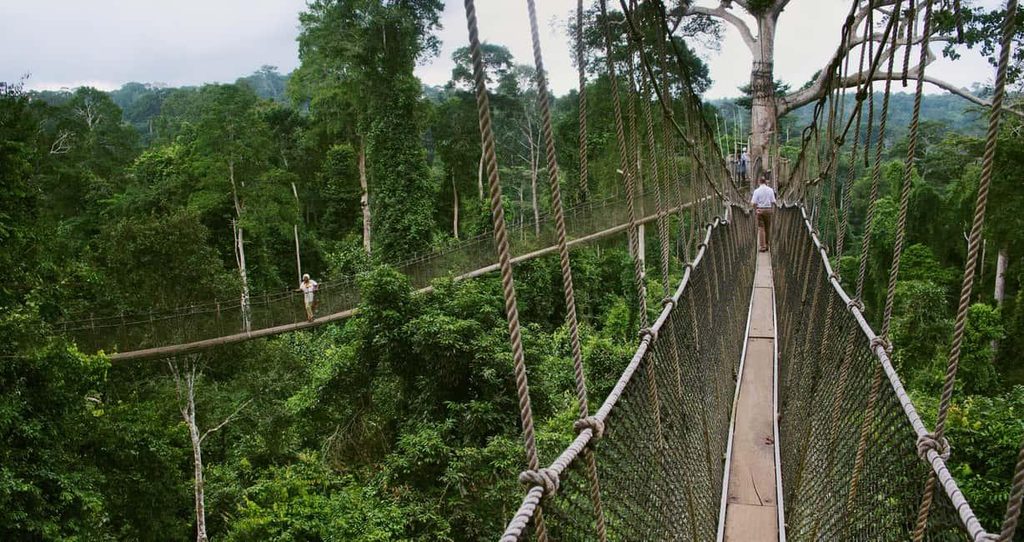
Kakum, in Ghana’s Central Region, protects an important area of Upper Guinean forest. Its best-known feature is a series of suspended bridges and platforms that allow visitors to experience the rainforest well above the ground.
For general visitors, the canopy walkway is an attraction in its own right. For birdwatchers, its value is more specific: it brings observers closer to the level at which many forest birds feed and move. Hornbills, parrots and other canopy species can be difficult to study from a narrow trail beneath tall trees.
There is a distinction, however, between visiting Kakum as a tourist and using it as a serious birding site. The busiest part of the day is rarely ideal for quiet observation. A well-organised visit should consider an early start, the appropriate guide and time on forest trails as well as the bridges. Access arrangements for specialist early visits should be confirmed in advance.
Which birds should you look for?
Kakum’s birdlife includes Brown-cheeked Hornbill, Yellow-casqued Hornbill, African Grey Parrot and numerous greenbuls, barbets and forest flycatchers. White-breasted Guineafowl is a particularly desirable Upper Guinean speciality, but it is difficult to find and should not be presented as a routine sighting.
Bird identification in these forests demands patience. Many species are first detected by voice, and a good local guide who recognises calls is often more useful than a long checklist of possible targets.
Kakum also supports forest elephants, bongo and primates, including Diana Monkey. These are genuinely important components of the ecosystem, but visitors should not expect the regular large-mammal sightings associated with savannah parks. Dense vegetation and shy animal behaviour make encounters unpredictable.
The trade-off: Kakum is relatively accessible and offers an unusual canopy perspective, but its public visitor areas can be busy. Dedicated birders benefit from carefully timed visits rather than simply joining a standard midday walkway tour.
Ankasa: deeper forest and specialist birding
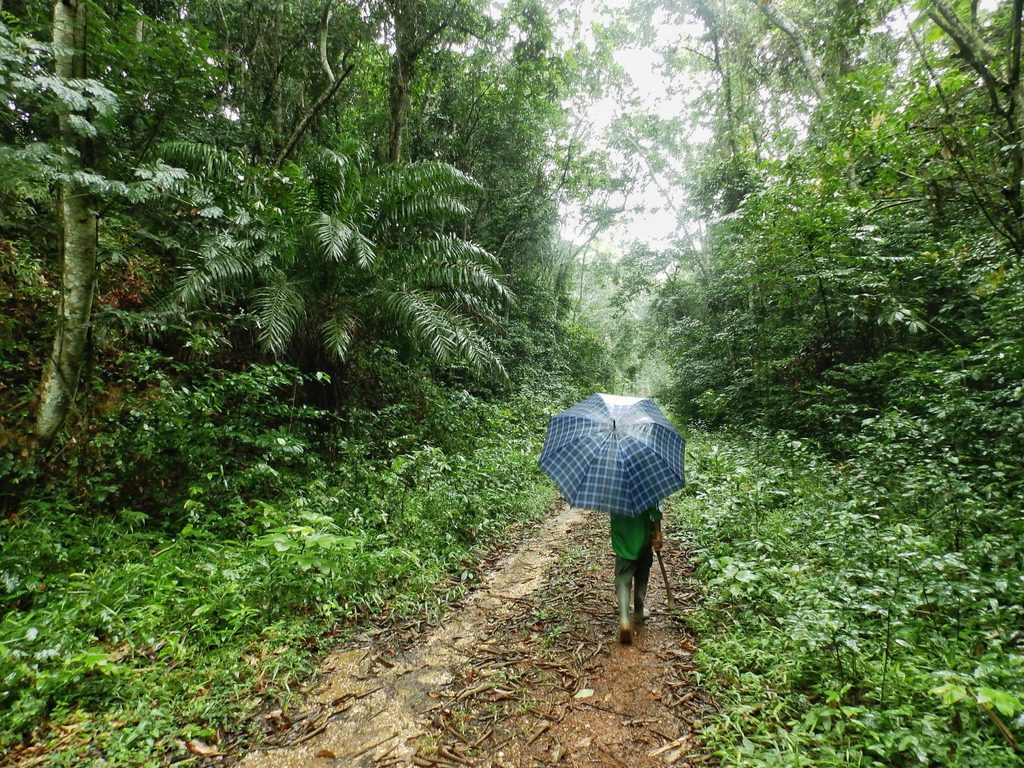
Farther west, the Ankasa Resource Reserve and adjoining Nini-Suhien National Park protect extensive wet evergreen forest. The landscape feels different from Kakum: wetter, more enclosed and, in places, more demanding to explore.
Ankasa is particularly appealing to travellers interested in forest specialities rather than quick, high-volume birding. Some birds may remain concealed despite being close by. Rain, mud, difficult light and long periods of listening are all part of the experience.
Why spend several nights?
A brief visit can be frustrating. Bird activity varies throughout the day, and a target heard on one morning may be difficult to locate until another. Spending several nights gives a guide more opportunities to work different forest sections and adjust the programme to conditions.
Among the species that attract specialist birders are Nkulengu Rail and forest owls, including Akun Eagle-Owl and Fraser’s Eagle-Owl. These are difficult birds; they require knowledgeable guiding, suitable conditions and considerable luck. Their presence in the wider area does not amount to a guarantee of seeing them.
The forest also provides habitat for mammals including forest elephant, bongo and several primates. As at Kakum, the primary attraction is the forest ecosystem rather than a conventional big-game safari.
For photographers, Ankasa presents a further consideration. A bird seen briefly in the understorey may be a rewarding observation but a poor photographic opportunity. Expect challenging light and bring equipment suited to humid conditions.
The trade-off: Ankasa offers a more immersive forest experience and the possibility of difficult specialities, but demands more time, greater tolerance for muddy trails and realistic expectations about visibility.
White-necked Rockfowl: a different kind of wildlife encounter
The White-necked Rockfowl (Picathartes gymnocephalus), also known as Yellow-headed Picathartes, is one of Ghana’s most sought-after birds. Its appearance is unmistakable, with a largely bare, brightly coloured head, long legs and a habit of moving among rocks and forest-floor vegetation.
Unlike the broad-ranging canopy birding at Kakum, a rockfowl visit is usually organised around a known, protected locality and a carefully managed observation period. Birds may approach their nesting or roosting areas late in the day, but sightings remain dependent on natural behaviour.
Community conservation and local guiding are central to the experience. Sites such as Asumura have been promoted for guided rockfowl visits, and arrangements should be made through authorised local guides. Visitors should follow instructions on where to stand, how long to remain and whether photography is appropriate.
It is particularly important not to crowd nesting areas, use flash or play recordings indiscriminately. A successful visit is one in which the birds can continue their normal behaviour.
Is the walk difficult?
Difficulty varies by site, season and the condition of the approach trail. Forest slopes, uneven ground and the need to wait quietly near rocks can be more demanding than the distance alone suggests.
Travellers with mobility restrictions should discuss the specific site before committing. A general assurance that the walk is ‘short’ is not enough: gradient, footing, steps and the return journey in fading light matter more.
How should you combine these sites?
For travellers primarily interested in Ghana’s forest birds, a sensible route gives each forest enough time instead of treating every stop as a single-night visit. Kakum can form an accessible introduction, followed by a dedicated rockfowl visit and several nights in Ankasa.
The order depends on international flights, road conditions, accommodation and the rockfowl site’s access arrangements. These are not three neighbouring attractions that can comfortably be visited in a single day.
A shorter, approximately seven-day forest-focused trip may suit experienced birders with a carefully selected target list. Around 12–15 days allows a much broader Ghana itinerary, potentially including coastal wetlands, Atewa’s forest habitats and the contrasting savannah of Mole National Park.
That wider route is particularly worthwhile for travellers who want more than forest specialities. Mole introduces open-country birds and a more conventional opportunity to look for larger mammals, although Ghana should still not be sold as a substitute for Kenya or Botswana when frequent big-game sightings are the principal objective.
When is the best time for Ghana’s forests?
Ghana can be visited throughout the year, but rainfall and trail conditions vary substantially between regions. The generally drier months from roughly November to March often make forest access easier, while rain can occur at any time in the southwest.
The timing of a rockfowl visit should be based on current local advice rather than a fixed claim that one month always guarantees a sighting. Seasonal behaviour, site access and the condition of approach trails can all influence the plan.
Birders also need to consider the daily rhythm. Early mornings are valuable for forest activity, whereas a rockfowl session may involve a late-afternoon wait. A private itinerary can accommodate both without forcing guests into a rigid group schedule.
Where should you stay?
Accommodation choices in Ghana’s forest regions are practical decisions as much as questions of comfort. A well-positioned, clean guesthouse near a birding site can be more useful than a more luxurious property requiring a long predawn drive.
For Kakum, Cape Coast and nearby accommodation provide several options, though transfer times to the chosen forest entrance should be checked. Ankasa has specialist accommodation near the reserve, but standards, facilities and current availability need to be confirmed for the intended dates.
We would also ask about reliable electricity, hot water, air conditioning or fans, packed breakfasts and the ability to return for a rest during the hottest part of the day. These details make a significant difference on a demanding forest itinerary.
What should you bring?
Binoculars, sturdy footwear with good grip, lightweight long sleeves and effective rain protection are essential. A small dry bag is useful for electronics. A telescope can help at suitable open viewpoints, although it is less useful along narrow forest trails.
Photographers should plan for high humidity and limited light. A headlamp is helpful for early departures and late returns, but should be used responsibly around wildlife.
Finally, allow some flexibility. A forest birding day is not measured solely by how many species appear on the list. A prolonged hornbill encounter, a Diana Monkey moving through the canopy or a carefully observed rockfowl can be more rewarding than rushing between sites.
Planning a private Ghana birding and wildlife holiday
The strongest Ghana itineraries are built around a realistic target list, local field knowledge and enough time to work difficult habitats. Kakum offers access to the canopy, Ankasa rewards patience in deeper rainforest, and White-necked Rockfowl visits show how specialist wildlife tourism can support local conservation.
At Wild Birding, we arrange private tailor-made Ghana birding tours around your interests, preferred pace and comfort level. Whether you want a focused forest trip or a broader journey combining birds, mammals and culture, get in touch and we’ll help plan a sensible route.
No Comments