



22 Nov Birding in Kaeng Krachan: Thailand’s Forests, Hornbills and Broadbills
Thailand is one of Asia’s most rewarding destinations for birdwatchers, and Kaeng Krachan National Park is a major reason why. Close enough to combine with other central Thailand sites, yet extensive enough to reward several days, the park protects forested hills where the birdlife is very different from the country’s wetlands and coastal mudflats.
What makes Kaeng Krachan special?
Kaeng Krachan forms part of the forest landscape along Thailand’s western border with Myanmar. Its varied elevations and evergreen and semi-evergreen forest support a rich mix of birds and mammals. The birding experience is often about patience: waiting at a fruiting tree, listening for a calling bird inside the forest or following a mixed feeding flock along a quiet track.
It is not a place where every species sits in the open for a photograph. Forest birds can be remarkably difficult to see, particularly when they remain high in the canopy. A local guide who recognises calls and understands which elevations and trails are accessible can transform a day in the field.
Birds to look for
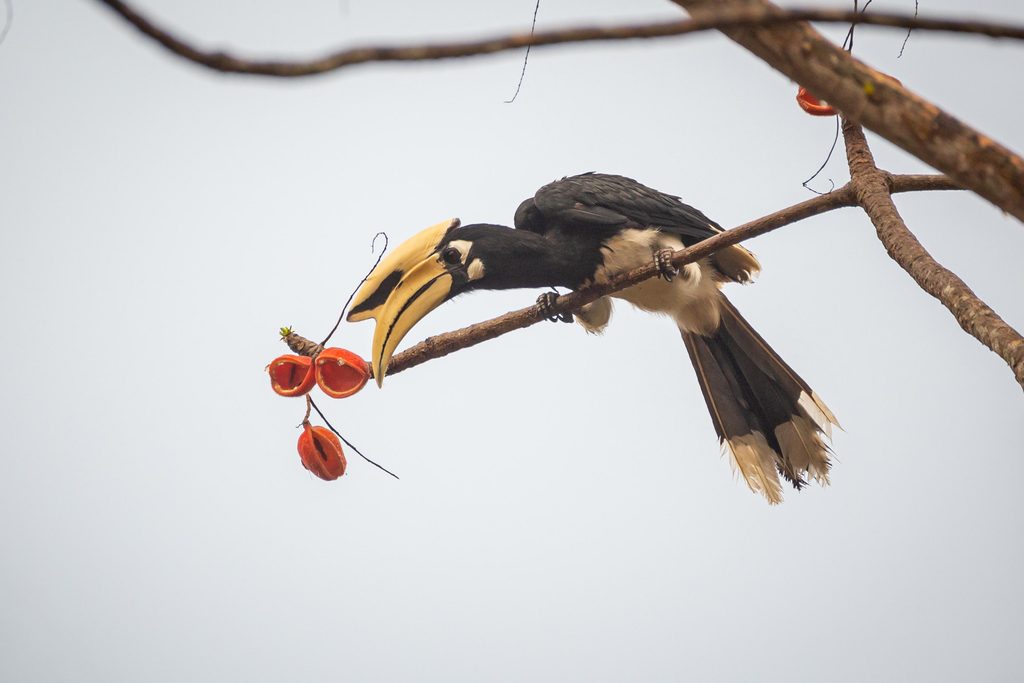
Hornbills are among the park’s great attractions. Great Hornbill and Oriental Pied Hornbill are two possibilities, while other hornbill species require more specific habitat, timing and luck. Their presence is one of the reasons to spend time scanning fruiting trees rather than walking continuously.
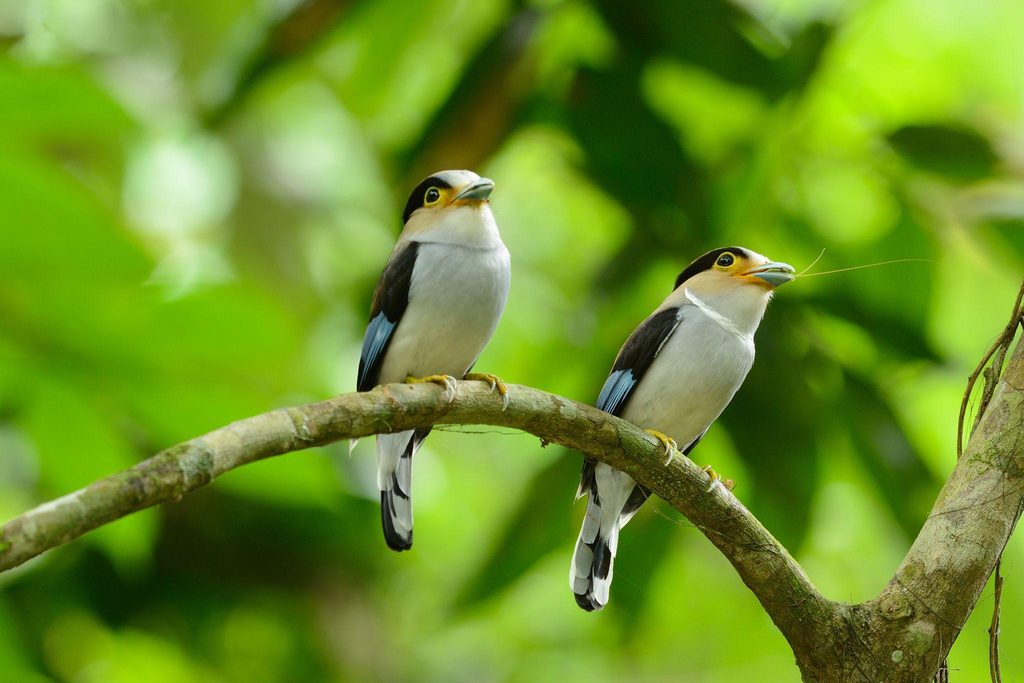
Broadbills add colour and character to the forest. Species such as Silver-breasted Broadbill and Black-and-yellow Broadbill are sought after by visiting birders, although sightings are never guaranteed. Woodpeckers, barbets, bulbuls, drongos, flycatchers and laughingthrushes contribute to the variety, and identifying them can be one of the most enjoyable parts of a guided day.
One of the advantages of a multi-day visit is the opportunity to revisit productive stretches of forest. A quiet trail one morning can be full of activity the next. Rather than building an itinerary around a long list of promised species, we prefer to identify realistic targets and leave enough time to work through them properly.
And the mammals?
Kaeng Krachan is also important habitat for Asian Elephant, gaur, gibbons and a range of smaller mammals. Large mammals are not necessarily easy to encounter, and a birding holiday should not be sold as a guaranteed big-mammal safari. Nevertheless, an unexpected gibbon call or elephant sighting can be a memorable part of a forest day.
Visitors should follow park regulations, keep a safe distance from wildlife and never approach elephants for a photograph. Road access, trail permissions and park opening arrangements can change, so these should be checked locally when planning the journey.
How does it compare with Thailand’s other birding areas?
Kaeng Krachan is a forest destination. By contrast, the Gulf of Thailand’s coastal wetlands and salt pans are known for shorebirds, particularly during the northern winter. A journey that includes both gives a far broader picture of Thailand’s birdlife than either habitat alone.
For visitors with a particular interest in waders, the coastal sites around Pak Thale and Laem Phak Bia may be an important addition. Spoon-billed Sandpiper is an exceptionally sought-after winter visitor to the wider region, but it is rare and cannot be guaranteed. Finding it requires suitable dates, up-to-date local information and careful fieldwork.
When is the best time to go?
Many visiting birders favour the cooler, generally drier part of the year, approximately November to February, especially when combining forest birding with wintering shorebirds. Conditions are still tropical, however, and rainfall, mist and temperature vary with altitude and weather patterns.
Spring can bring active forest birds, but the heat may be more demanding. Heavy rain during the wet season can complicate road and trail access. There is no single date that suits every target, so the ideal season depends on whether your priorities are resident forest birds, migrants or coastal waders.
How many days do you need?
We would usually allow at least three full birding days in the Kaeng Krachan area for a serious birding visit, with additional time if you have an extensive target list. Forest birding rewards repetition. A shorter stay can still be enjoyable, but it increases the chance of leaving just as a productive patch of forest comes alive.
For a wider private itinerary, Kaeng Krachan can be paired with coastal birding and other habitats in central or northern Thailand. We would also account for travel times, park access and the energy needed for early starts rather than cram too many distant sites into one week.
Planning a private Thailand birding holiday
Thailand works particularly well for tailor-made birding because the route can be shaped around the species you most want to see. Some travellers prefer patient forest birding with a telescope and a detailed target list; others enjoy a broader mix of birds, wildlife, food and culture.
At Wild Birding, we work with knowledgeable local guides and build private itineraries around your interests and pace. If Kaeng Krachan is on your list, contact us and we can discuss the right season, number of days and combination of habitats for your trip.
No Comments