



23 Nov Ruaha or Nyerere? Choosing the Right Southern Tanzania Safari
For travellers who have already seen Tanzania’s northern safari circuit, the south offers a different proposition. Ruaha and Nyerere national parks are both enormous protected landscapes with elephants, predators and rewarding birdlife, but they are not interchangeable. The choice affects how you spend each day, the sort of wildlife encounters you can reasonably hope for and how much time you need.
The essential difference: dry-country wilderness or river safari?
Ruaha is a landscape of baobabs, rocky hills, miombo woodland and the Great Ruaha River. Much of the classic game viewing is by vehicle, with attention focused on river corridors and productive woodland. The park is particularly appealing to people who enjoy searching for predators and less frequently seen antelope rather than simply ticking off familiar safari animals.
Nyerere, formerly part of the wider Selous protected landscape, is defined in its better-known visitor areas by the Rufiji River and associated lakes, channels and floodplains. A well-planned stay can combine game drives with time on the water. Watching elephants, hippos and waterbirds from a boat is not just another activity: it changes the perspective of the entire safari.
According to Tanzania National Parks (TANAPA), Ruaha covers approximately 19,822 square kilometres, while Nyerere covers around 30,893 square kilometres. Those impressive figures do not mean guests can explore every corner. The position of the camp and the road or water network accessible from it matter far more than the park’s total area.
Which park is better for lions, wild dogs and elephants?
Ruaha: predators, kudu and dry-season river crossings
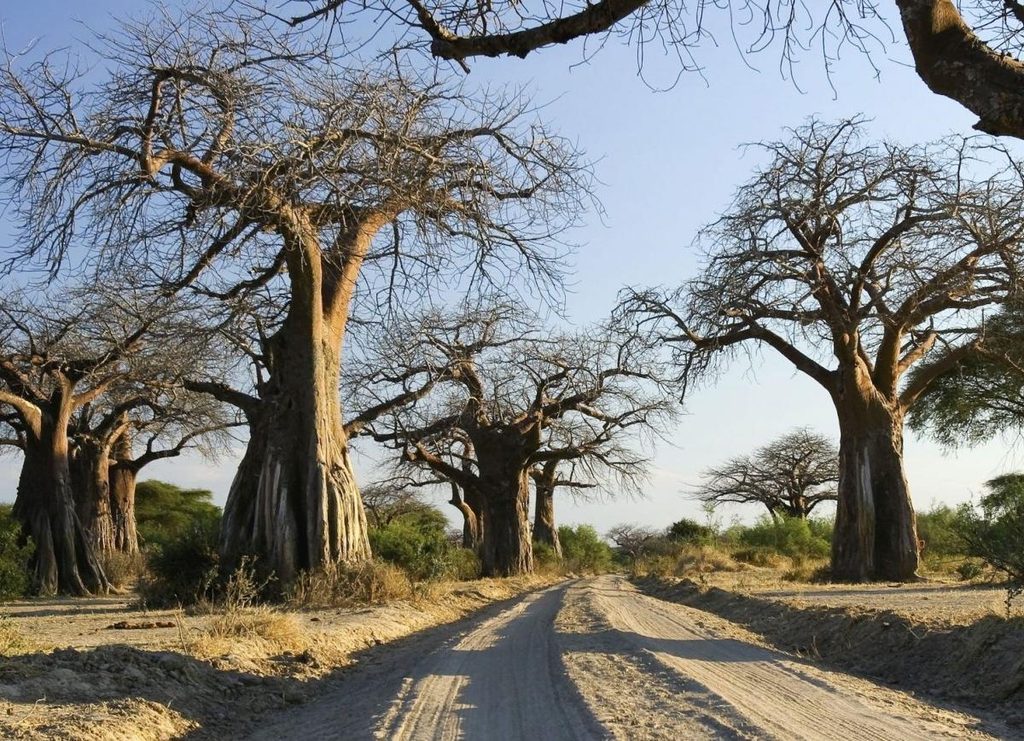
Ruaha supports lions, leopards, elephants and African wild dogs, as well as greater and lesser kudu, sable and roan antelope. The mix of East and southern African habitats is part of its appeal. Greater kudu are a realistic species to look for in suitable woodland; sable and roan are much less predictable and should be treated as specialist targets, not promised sightings.
During the drier months, animals often use the Great Ruaha River and its remaining pools. That can make for memorable encounters with elephants and buffalo, particularly when a guide takes time to watch a crossing or wait near a water source. Lion sightings can be excellent, but even here a particular pride or hunt is never guaranteed. Wild dogs range widely and may be absent from an area for days.
Nyerere: a broader mix of river and land encounters
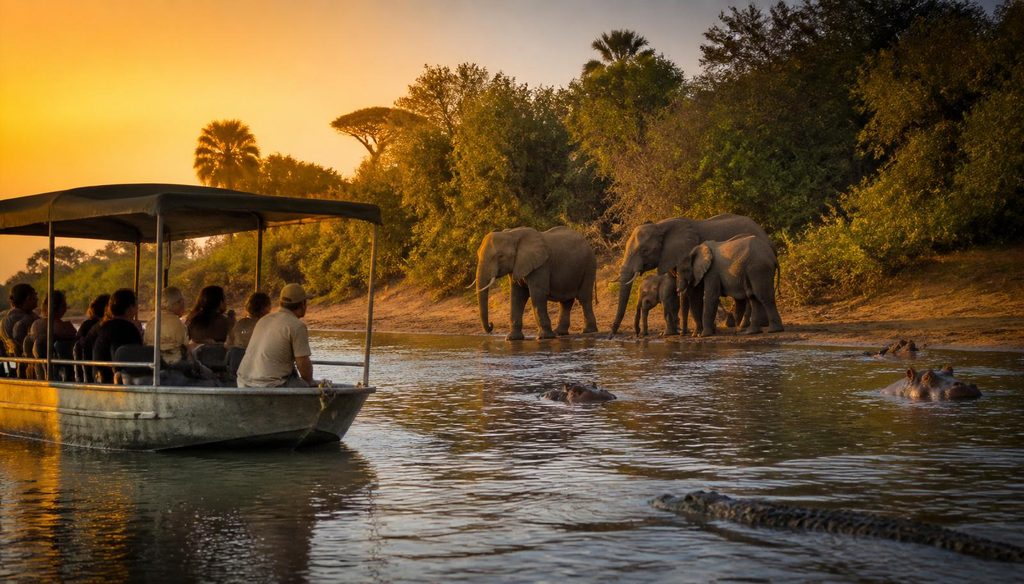
Nyerere also holds lions, leopards, elephants and African wild dogs. The Rufiji system adds dependable habitat for hippos and Nile crocodiles, while open areas and woodland support buffalo, giraffes and antelope. The possibility of seeing a herd drinking from a boat can be a compelling reason to choose Nyerere.
It is worth being precise about wild dogs. Both parks are important for the species, but neither should be marketed as a guaranteed wild-dog safari. Recent local sightings, the season and how much time you can spend in the field all influence your chances.
Birding: two different habitats, two excellent lists

TANAPA records more than 570 bird species in Ruaha. The park’s mixture of dry woodland, riverine vegetation and open country is especially interesting for hornbills, raptors and savanna birds. Tanzanian Red-billed Hornbill, sometimes called Ruaha Red-billed Hornbill, is a characteristic regional bird. Bateleur, Southern Ground Hornbill and African Fish Eagle are among the other species worth watching for, according to habitat and season.
Nyerere has more than 430 recorded bird species according to TANAPA’s wildlife information, with the Rufiji wetlands contributing herons, storks, kingfishers, bee-eaters and other water-associated birds. Pel’s Fishing Owl is a notable but elusive possibility in suitable riverine woodland. It is not a bird we would promise on a short visit.
For a keen birder, the decision is not simply which park has the larger checklist. Ruaha may suit someone interested in dry-country specialities and woodland birding, while Nyerere offers more opportunities to spend time around water and observe birds from a boat. Visiting both gives a richer contrast than extending a stay in one habitat alone.
Boat safaris, walking and photography

A boat safari is the clearest practical advantage of Nyerere. TANAPA explicitly lists boat trips along the Rufiji among the park’s activities. They can be particularly good for photographing waterbirds, crocodiles and animals at the water’s edge. Before booking, check that the chosen camp actually offers boating, where the excursion operates and whether water levels or park rules affect it.
Ruaha’s appeal is more closely associated with drives through riverine and dry woodland habitats, although selected camps also arrange guided walking experiences where permitted. Walking is not a substitute for a predator-focused game drive: its value lies in tracks, plants, birds and understanding the landscape at a slower pace.
Photography considerations differ too. In Ruaha, dusty dry-season light, baobabs and animal movement around the river can produce striking scenes. In Nyerere, boats can provide a low viewpoint, but moving platforms, reflections and changing light create their own challenges. For either park, a private vehicle or carefully arranged private activities give photographers more flexibility than a shared timetable.
When should you go?
Broadly, June to October is the classic dry-season window for both parks. Wildlife can become easier to locate as vegetation opens up and animals rely more heavily on permanent water. September and October can be very hot, particularly during the middle of the day.
The greener months bring fresh vegetation, breeding activity and migrant birds, but also greater uncertainty around access. Some seasonal camps close during the heavier rains. If birding is a priority, a green-season trip can be rewarding, provided the itinerary is built around camps that are genuinely operating and roads or airstrips that remain usable.
Avoid treating seasonal advice as a guarantee. River levels, rain timing and animal movements vary from year to year. We would confirm individual camp dates and transfer arrangements before recommending a departure.
Where should you stay?
Accommodation should be selected for its location and guiding as much as its level of luxury. In Ruaha, Nomad Tanzania’s Kigelia is an example of a small, safari-focused camp. Nomad also describes star beds associated with Kigelia, an experience worth discussing with guests who like sleeping close to the sounds of the bush. The operator advertises a July-to-October period for that experience; exact camp opening dates and availability must be confirmed directly.
In Nyerere, the key question is whether a camp offers the combination of boating, drives and walking that you actually want. A comfortable lodge beside a river is not automatically the best choice for a birder or photographer if its activities are limited or the most productive areas require long transfers.
There is no universal winner between a simple tented camp and an expensive lodge. A well-positioned mid-range camp with excellent guiding can be the better choice for wildlife-focused travellers, while a more luxurious property may be worth the premium for privacy, spacious rooms or flexible private activities. We would compare current inclusions, park fees, vehicle arrangements and seasonal opening dates rather than rely on headline nightly rates.
How many nights, and can you combine both parks?
Three nights in either park is a useful minimum for a first visit, though four nights generally allows a more relaxed rhythm and additional chances for difficult species. If your budget and available days permit, three or four nights in Ruaha followed by three or four in Nyerere can make a particularly varied southern Tanzania safari.
The parks are not neighbours. A combined itinerary usually needs a carefully planned light-aircraft connection, sometimes involving a change or an overnight stop depending on the current timetable. Do not assume a direct flight operates every day or that an airstrip is equally convenient for every camp. Luggage restrictions, transfer times and the order of the parks all need checking.
If you have only four or five nights in southern Tanzania, choosing one park and exploring it properly may be more satisfying than spending valuable safari time moving between them.
So, Ruaha or Nyerere?
Choose Ruaha if your priorities are baobab landscapes, classic game drives, big predators, kudu and dry-country birding. Choose Nyerere if you want the added variety of boat safaris, Rufiji River wildlife and wetland birds. Choose both if you have the time and would enjoy seeing how two very different southern Tanzanian ecosystems complement each other.
At Wild Birding, we design private, tailor-made journeys for travellers interested in birds, mammals and the wider safari experience. Tell us what you most want to see, how you like to travel and the level of accommodation you prefer, and we can help build a realistic southern Tanzania route. Get in touch to discuss your safari.
Further reading and sources
Tanzania National Parks: Ruaha National Park; Tanzania National Parks: Nyerere National Park; TANAPA: Nyerere Wildlife and Habitats; TANAPA: Nyerere Visitor Brochure; Nomad Tanzania: Kigelia Star Beds. Information checked November 2026; operating arrangements should be reconfirmed before booking.
No Comments