



17 Nov South Luangwa or Lower Zambezi? Choosing the Right Zambia Safari
Zambia has two outstanding safari regions that are often considered together, yet offer quite different experiences. South Luangwa National Park is celebrated for its predator sightings, walking safaris and varied habitats. Lower Zambezi National Park, meanwhile, offers a combination of wildlife viewing, boating and canoeing along one of Africa’s great rivers.
Both can deliver excellent wildlife encounters, knowledgeable guiding and beautiful accommodation. The question is not necessarily which park is better, but which suits your interests, preferred activities and time of year. For some travellers, the answer will be to visit both. For others, choosing one and spending longer there may produce a more rewarding holiday.
South Luangwa: predators, walking safaris and varied habitats
South Luangwa is one of Zambia’s most established safari destinations. The Luangwa River and its associated lagoons, oxbow lakes and woodland provide habitat for substantial populations of hippos, elephants, buffalo and numerous antelope species.
Leopard is one of the park’s principal attractions. The combination of suitable habitat, experienced guides and opportunities for night drives makes South Luangwa particularly appealing to travellers interested in predators. Lions are also regularly encountered, although no particular sighting can be guaranteed.
South Luangwa is also associated with the development of guided walking safaris. Walking offers a different understanding of the bush: tracks, animal behaviour, smaller creatures and the relationship between different habitats become as interesting as the larger mammals.
What makes South Luangwa distinctive?
One advantage is the variety of accommodation. Around Mfuwe, there are established lodges with relatively convenient access to the park. Further into the valley, smaller seasonal bushcamps provide a more remote experience, often with walking as an important part of the programme.
This gives travellers considerable flexibility. A safari can combine comfortable accommodation and regular game drives with several nights in a smaller camp where the emphasis is on walking and quieter surroundings.
South Luangwa is also an important destination for birdwatchers. Southern Carmine Bee-eaters establish breeding colonies in suitable riverbanks during the later dry season, while the riverine woodland, lagoons and open habitats support an extensive range of other species. Thornicroft’s Giraffe, a distinctive giraffe population associated with the Luangwa Valley, is another particular attraction.
The trade-off: South Luangwa’s central game-viewing areas can be busier than its more remote sectors, especially during peak season. Travellers seeking privacy should consider their camp location carefully rather than assuming that every part of the park offers the same experience.
Lower Zambezi: wildlife from the water
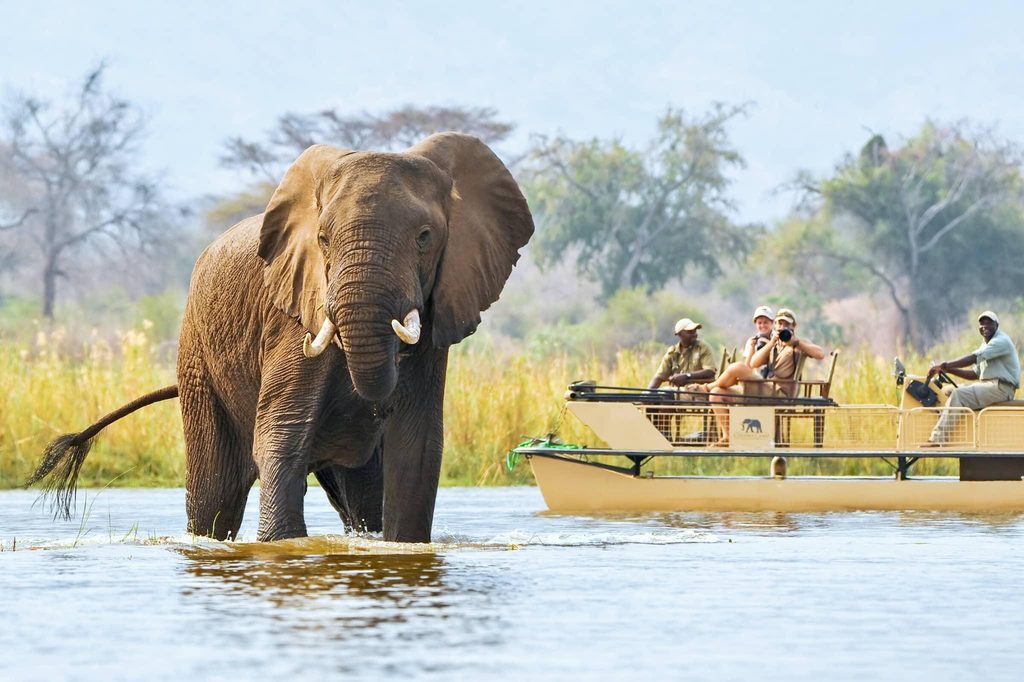
Lower Zambezi National Park occupies a striking position between the Zambezi River and the escarpment to the north. Across the river lies Zimbabwe’s Mana Pools National Park, creating a wider landscape of considerable conservation importance.
The river is central to the experience. Elephants frequently use the riverine habitats, while hippos and crocodiles are familiar sights. Buffalo, lions, leopards and African Wild Dogs may also be encountered.
What makes the Lower Zambezi especially appealing is the opportunity to observe wildlife in several different ways. A morning game drive might be followed by an afternoon boat excursion, while a guided canoe safari offers a perspective that is difficult to replicate from a vehicle.
Canoeing on the Zambezi
Canoeing is one of the park’s signature activities. Travelling quietly through channels and along the river’s margins can produce memorable encounters with birds and mammals.
However, this is not an activity to undertake independently. Hippos, crocodiles, currents and changing river conditions require experienced professional guides and careful route selection.
Travellers who are uncomfortable in small boats, have mobility restrictions or prefer conventional vehicle safaris should discuss this before choosing a lodge. Canoeing is not compulsory, and many properties offer a range of alternatives.
Birding in the Lower Zambezi
The river and its associated woodland are particularly rewarding for birdwatchers. African Fish Eagles are characteristic of the area, while kingfishers, herons, bee-eaters and other water-associated species can be found along the channels. Pel’s Fishing Owl is a notable specialist target, although it is elusive and should never be treated as an expected sighting.
The mixture of river, woodland and escarpment habitats provides considerable variety for travellers combining general wildlife viewing with birding.
The trade-off: Lower Zambezi accommodation is often oriented towards small, relatively expensive river camps. Some properties are inside the national park, while others are in the adjoining Chiawa Game Management Area. Their locations affect transfer times, activities and access to particular game-viewing areas.
Which park is better for wildlife?
Both parks offer excellent safari opportunities, but their strengths differ.
| Interest | South Luangwa | Lower Zambezi |
|---|---|---|
| Leopards | Particularly strong reputation | Good opportunities |
| Lions | Regularly encountered | Present, with sightings varying |
| Elephants | Common in suitable areas | Particularly memorable along the river |
| African Wild Dogs | Possible, not guaranteed | Possible, not guaranteed |
| Walking safaris | A major speciality | Available at suitable camps |
| Canoeing | Not a principal activity | One of the defining experiences |
| Boat safaris | Limited and seasonal at selected properties | Central to many lodge programmes |
| Birding | Riverine woodland, lagoons and seasonal colonies | River channels, woodland and waterbirds |
If leopard photography and walking are your main priorities, South Luangwa is a strong starting point. If you would particularly enjoy watching elephants from a boat or exploring the Zambezi by canoe, the Lower Zambezi offers something different.
For wildlife photographers, the choice also depends on preferred subjects, light, access and whether photography from a moving boat is appealing.
When is the best time to visit?

The dry season, broadly from May or June to October, is generally the most straightforward period for combining South Luangwa and the Lower Zambezi.
As seasonal water sources diminish, wildlife becomes increasingly concentrated around permanent rivers and remaining pools. Vegetation also becomes less dense, often making mammals easier to locate.
June and July usually offer cooler conditions, particularly pleasant for walking. August and September are popular for general wildlife viewing, while October can deliver excellent sightings but also intense heat.
The green season, roughly November to April, presents a different picture. South Luangwa becomes lush, with migrant birds, breeding activity and dramatic landscapes. Selected permanent lodges continue operating, but many remote bushcamps close because of flooding or difficult road conditions.
In the Lower Zambezi, seasonal camp closures and restricted access can make travel considerably more complicated during the rains.
The important point is that the best time for general wildlife viewing is not necessarily the best time for every bird species or specialist experience. Travellers interested in Southern Carmine Bee-eater colonies, for example, should plan around their breeding season rather than simply choosing the coolest month.
Where should you stay?
The accommodation choice can influence the safari almost as much as the destination.
South Luangwa accommodation
Around Mfuwe, established lodges can offer a practical base with good access to the central park. These may suit travellers who want comfortable facilities, straightforward transfers and a balance of drives and walks.
Smaller bushcamps further into the valley appeal to those looking for a more remote experience. They often have fewer rooms and operate seasonally.
For a longer holiday, splitting time between a central lodge and a remote bushcamp can provide useful variety without changing destination entirely.
Lower Zambezi accommodation
In the Lower Zambezi, we would pay particular attention to the exact river frontage, camp location and activities included. Some camps concentrate on game drives and walking, while others have extensive boating, canoeing and fishing programmes.
A lodge described as being in the Lower Zambezi area may be outside the national park itself. That is not necessarily a disadvantage, but it can influence how much time is spent travelling to wildlife-viewing areas.
The more expensive property is not automatically the most suitable. A beautifully appointed river lodge may be ideal for a relaxed wildlife holiday, while a simpler camp with strong guiding and a favourable location may better suit an enthusiastic photographer or birder.
How do you travel between South Luangwa and the Lower Zambezi?
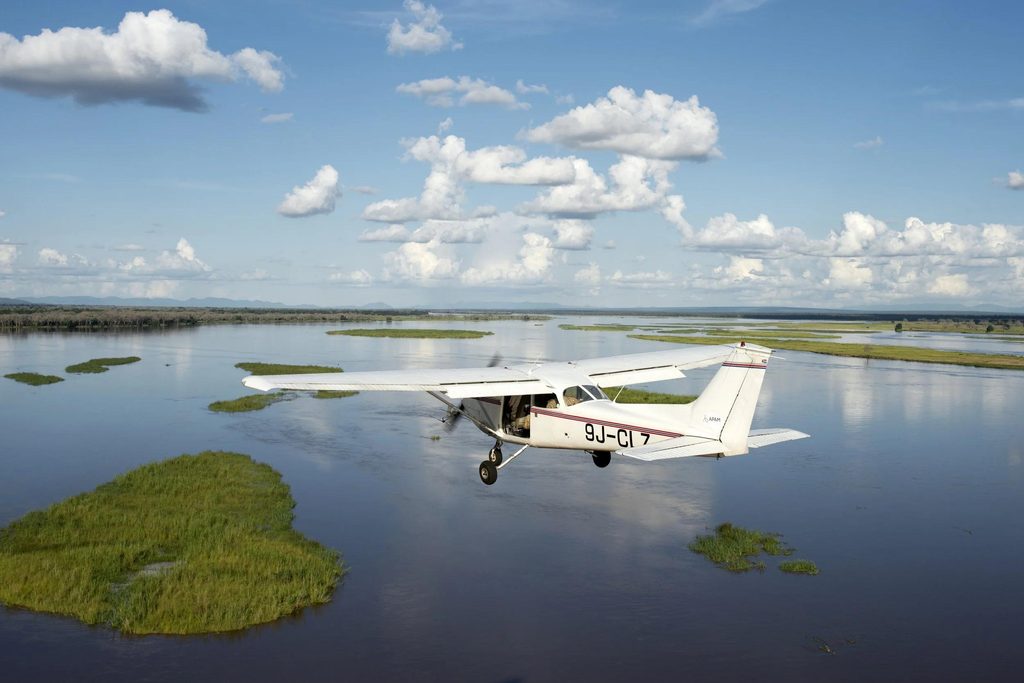
For most travellers combining the two parks, flying is the most practical approach. South Luangwa is normally accessed through Mfuwe Airport, while the Lower Zambezi is served by airstrips including Jeki and Royal.
Domestic flight arrangements can connect the parks through Lusaka, with direct seasonal links sometimes available. Flight schedules and operating dates need to be checked for the actual travel year.
A road-based itinerary is possible in certain circumstances, but these parks should not be treated as neighbouring stops connected by an easy transfer. Long distances, road conditions and seasonal access can make overland travel inefficient.
For a private safari, we would generally favour fewer transfers and sufficient time at each destination.
How many nights do you need?
Three nights in either park provides an introduction, but four nights is usually more satisfying, particularly when several activities are of interest.
A well-paced eight- or nine-night Zambia safari might include:
- Four nights in South Luangwa, combining game drives, a night drive and a guided walk.
- Four nights in the Lower Zambezi, allowing time for drives, boating and an optional canoe safari.
- An additional night in Lusaka if required by international flight connections.
Travellers with ten to twelve nights could consider splitting their South Luangwa stay between two camps, or adding time around Livingstone and Victoria Falls.
The important thing is not to fill every available day with a transfer. Wildlife encounters are unpredictable, and staying longer in one place allows guides to respond to recent sightings and changing conditions.
Which Zambia safari would we recommend?
For a first-time visitor particularly interested in big cats, varied game drives and walking safaris, South Luangwa would usually be our starting point.
For travellers who have already experienced traditional vehicle safaris and want a different perspective, the Lower Zambezi’s river-based activities are a compelling reason to visit.
If time and budget permit, combining both creates an excellent contrast: the Luangwa Valley’s woodland, lagoons and predators followed by the broad Zambezi River, elephants and water-based exploration.
Zambia also offers specialist wildlife destinations beyond these two parks. The Bangweulu Wetlands, for example, provide opportunities to seek Shoebills and Black Lechwe, although they require a different approach to timing and logistics.
At Wild Birding, we design private, tailor-made wildlife and birding holidays around what matters most to each traveller. Whether your priority is leopards, walking safaris, bird photography or a combination of Zambia’s finest wilderness areas, we’ll help you choose the right route, accommodation and season.
Explore our Zambia holidays or get in touch to discuss a personalised safari.
No Comments